

Imagine typing a complex question into Google and instantly seeing a concise answer at the top of the results page. That’s the power of AI Overviews – Google’s new AI-driven search feature. AI Overviews are generative answers that summarize key information for your query, so you don’t have to click through multiple sites to get the gist. In practice, Google might display an AI Overview right above the usual blue links, providing an AI-generated snapshot of the topic with links to explore further on the web. This saves you time and effort: as Google puts it, AI Overviews “provide a snapshot of key information about a topic” with source links included.
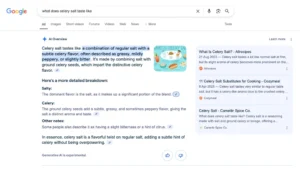
The image above illustrates an AI Overview on Google. Notice how it gives a clear answer at the top of the page (in this case, explaining a topic or showing relevant details) while still listing traditional search results below. In other words, AI Overviews turn Google into both a search engine and an answer engine. Instead of scrolling through snippets on different sites, you get a quick summary powered by Google’s AI.
The feature is now live in hundreds of countries (Google reports availability in over 200 countries and 40+ languages as of 2025), so it’s increasingly common worldwide. In this article we’ll explore exactly what AI Overviews are, how they work, and why they matter – for both users and anyone concerned about SEO and content visibility.
How AI Overviews Work
Under the hood, AI Overviews rely on Google’s advanced large language models (specifically the Gemini model) and search infrastructure to gather and synthesize information. In simple terms, Google’s AI reads the web for you. When you ask a question, the system performs multiple searches in parallel (a process Google calls query fan-out), then uses its AI to distill a concise answer from diverse sources. For example, TechRepublic explains that AI Overviews “lean on the software giant’s custom large language model, Google Gemini, to provide snapshot-type answers” by pulling relevant data from Google’s index. The result is an answer that blends knowledge from many sites into a unified response.
This broader move toward AI-assisted information delivery also aligns with how public-sector institutions are approaching AI transparency and trust, as outlined by the U.S. National Institute of Standards and Technology (NIST) in its AI Risk Management Framework.
Key features of AI Overviews include:
-
Concise Summaries: The AI generates a brief answer that captures the essential information about your query. This might look like a short paragraph or bullet points, depending on the question.
-
Source Links: Prominent links to the underlying sources are included, so you can “dig deeper” if you want more details. Google actually prioritizes these links to ensure “users can access more in-depth information directly from authoritative websites”.
-
Adjustable Detail: Google even lets users refine the result. You may see options like “Simplify” or “Break it down” to make the language easier or more detailed. This means one AI Overview can adapt to different needs without doing multiple searches.
-
Selective Triggering: Not every search gets an AI Overview. Google’s systems decide when it adds value. In practice, complex or multi-part questions often trigger an Overview, while simple queries may show classic results only. Google’s search team notes that Overviews are reserved for queries “where [Google] feels it can add value beyond the search results”.
Techniques like query fan-out allow the AI to consider many related concepts at once and cite more sources than a typical search result. In effect, AI Overviews can handle multi-step queries: for example, a search for “best yoga studios near me with free trials” might return an AI summary listing studios, distances, and offers, all in one block【11†】. Underneath, the same organic results still appear – it’s not a separate app. This hybrid approach keeps Google’s classic search backbone intact while adding AI-powered summaries.
Benefits of AI Overviews
AI Overviews bring several potential advantages, both to searchers and (surprisingly) to content providers:
-
Faster Answers and Convenience: Instead of scanning multiple pages, you get an instant summary. This saves time and makes Google feel more like a helpful assistant. Many users “appreciated the convenience of obtaining immediate and relevant information” without extra clicks. In practice, AI Overviews help you “get to the gist of a complicated topic or question more quickly”, according to Google.
-
Complex Query Handling: Google can now tackle more nuanced questions in one shot. Where you might have needed several searches before, AI Overviews bundle the info together. For example, they can combine recommendations, comparisons, or step-by-step results (like meal plans or travel itineraries) in one place. This “multi-step reasoning” capability turns Google into a brainstorming partner.
-
Diverse Content Exposure: Interestingly, Google reports that AI Overviews increase the range of sites people visit. Because the AI draws on many sources, users are “visiting a greater diversity of websites” to learn about complex topics. In other words, your content may reach new audiences as part of those source links, rather than only competing for the top spot. Google’s study found that Overviews often link to smaller or less-known sites, broadening discovery.
-
SEO Opportunities: For brands, being included in an AI Overview can be a boon. In fact, data shows that if your site is cited in an AI Overview, you get significantly more clicks compared to when you’re absent. In one industry study, pages mentioned by the AI saw ~35% higher organic click-through versus similar pages that weren’t mentioned. In short, appearing in an AI Overview can amplify your visibility (despite overall CTR declines).
-
Consistent Global Reach: Google has rapidly rolled out AI Overviews worldwide. From its US debut in mid-2024 to “over 200 countries and territories” by 2025, this feature is now global. It supports dozens of languages, so users everywhere are experiencing the benefits. As a content creator, that means your audiences from Europe to Asia are also encountering AI-driven answers.
In essence, AI Overviews make search more interactive and efficient. They’re like having a smart AI SEO guide preview your answers. For curious users and businesses alike, that’s a powerful new tool. (And from a user’s perspective: yes, sometimes it feels like magic – but it’s really just Google’s fancy new summary technology!)
Challenges and Risks of AI Overviews
No technology is perfect, and AI Overviews introduce new challenges alongside their benefits. Key concerns include:
-
Accuracy and Misinformation: AI isn’t infallible. Early AI Overviews sometimes included hallucinations – facts that aren’t true. Famously, Google’s own leader admitted the AI once told people to “eat rocks” or “put glue on pizza” due to misinterpreted forum content. These bizarre errors (picked up from unreliable or satirical sources) highlight that Overviews can produce nonsense if not carefully guarded. Critics warn that relying solely on AI summaries “may perpetuate inaccuracies or oversimplify complex topics”. Google is actively refining its AI, but searchers should remain cautious and double-check important claims.
-
Publisher and Traffic Concerns: Since AI Overviews give users the answer up front, many fear they encourage “zero-click searches” – where people stop at the summary instead of visiting any site. Publishers worry this cuts into page views and ad revenue. In fact, some news organizations have already cited declining referral traffic after Overviews launched. The risk is particularly high for sites that traditionally rely on traffic from informational queries. Google says it’s trying to mitigate this (for example, by adding more links in the Overview), but publishers remain anxious.
-
SEO Impact – Declining Click-Through Rates: Independent studies confirm that click-through rates have dropped on queries with AI Overviews. A recent analysis found that organic CTR plunged by over half when an AI Overview appeared. Another study using actual user data (Pew Research) showed that people were significantly less likely to click on any result link when an AI summary was present. In other words, those #1 ranking pages that once dominated clicks are now much less visible on the page. This shift means websites may see less search traffic for affected queries. On the flip side, if your page is featured in the AI Overview, it can actually see more clicks. Overall, though, SEO performance is being reshaped: even queries that don’t trigger an Overview have seen CTR declines as user habits change.
-
Content Quality and Originality: There are also concerns about intellectual property. AI Overviews essentially recycle information from other pages to form their answer, which led some publishers to sue Google for “regurgitating” their content. Ethically, questions arise about how the AI credits sources and uses copyrighted material. If your content is summarized, you may worry about whether it’s fairly represented and attributed. Google insists that the AI provides credit through links, but this is a new territory for copyright law. Content creators will need to keep an eye on how their work is used and strive to produce unique, authoritative material that even a smart AI can’t simply paraphrase away.
-
User Trust and Misuse: Because AI Overviews are presented so authoritatively, there’s a danger users might trust them implicitly. This is risky especially in areas like health or finance. Google has already restricted Overviews for certain sensitive health topics after issues were flagged, and introduced rules to suppress unhelpful results from forums. Nevertheless, misinformation can still slip through. Users must learn to interpret these answers critically, and Google must keep tightening its guardrails.
In summary, AI Overviews introduce a search paradox: they make finding info faster, but can sideline websites and potentially propagate errors. Both users and SEO professionals must adapt. On the bright side, Google acknowledges these issues and is iterating rapidly. Ongoing refinements (like better source filtering and allowing user feedback) aim to minimize the downsides. Still, it’s important for everyone to use these AI answers wisely and for creators to adjust strategy accordingly.
AI Overviews vs. Traditional Search (Featured Snippets)
It helps to contrast AI Overviews with the older “featured snippet” results:
-
Source of Content: A featured snippet copies a piece of text directly from one high-ranking page. By contrast, an AI Overview synthesizes information from many sources, generating a new answer. This means Overviews consolidate broader knowledge, whereas snippets show a quoted excerpt.
-
Appearance and Interaction: Both appear above organic results, but AI Overviews often occupy more space (multi-paragraph or list) and may include interactive options (like “simplify”). Featured snippets are static text. Overviews usually have a “Upvote/Downvote” or follow-up icons (see image) to collect user feedback.
-
Optimization: Snippets can be targeted by explicitly structuring content (e.g. using FAQ schema or concise Q&A format). AI Overviews, on the other hand, are chosen automatically and Google says no special markup is needed. In other words, the way to win in AI Overviews is to write genuinely helpful, authoritative content – basically following good SEO practice as usual.
-
Effect on Clicks: Both can reduce click-through rates, but Overviews tend to have a larger impact because they are more prominent and comprehensive. The click data studies mentioned above highlight how Overviews drive more “zero-click” behavior than classic snippets did.
Overall, think of AI Overviews as a next-generation featured snippet – one that’s dynamically generated and richer in sources.
Impact on Search & SEO Strategy
The rise of AI Overviews is a game-changer for search behavior and SEO. Key takeaways for content creators and marketers:
-
Adapting Content Focus: Since AI Overviews often target informative, longer queries, focus on creating deep, user-centric content. Answer users’ nuanced questions with clarity. Remember that Google’s guidance is to keep applying SEO fundamentals – good titles, structured content, readable text – because the AI still sources from what’s already on the page. Also ensure your pages clearly address specific queries; Google’s AI prefers fact-based, question-oriented queries.
-
Earning AI Citations: If an AI Overview cites your page, you benefit. Monitor your search performance and identify queries where you could be cited. Structured data and FAQs (though not required) might help highlight key facts for the AI to use. Visibility is key: studies show brands mentioned by the AI get up to 35% more organic clicks. In contrast, pages not mentioned in an AI response suffer bigger declines. So aim to be a clear authority on topics in your niche.
-
Diversifying Traffic Sources: Given the drop in CTR for traditional search results, don’t rely solely on organic traffic from search. Explore other channels – social, email newsletters, direct outreach – to engage audiences. This way, even if search referrals dip, your site can still reach people. Also, use analytics to watch for shifts; Google Search Console now reports AI feature traffic together with web clicks.
-
Global and Vertical Variations: Note that AI Overviews are not uniform across regions and topics. Semrush data indicates that in 2025 the prevalence of Overviews varied by query type – initially over 90% were for informational searches, but now many transactional and navigational queries also trigger them. Also, some industries (like science or technology) see them more than others. Stay updated on how your specific market is affected.
-
Monitor User Engagement: Because Google suggests that clicks from AI-driven results tend to have higher engagement, measure quality, not just quantity. If you still get traffic, track metrics like time-on-page and conversions – these may actually improve if users are more engaged with the content they do click.
In short, AI Overviews are reshaping the SEO landscape. While zero-click behavior is rising, Google isn’t offering any easy workarounds – in fact, no new SEO magic bullet is needed. The best strategy is to double down on high-quality, authoritative content that serves the user’s needs. That approach has always been Google’s advice, and it remains true in this new AI era.
| Timeline | AI Overviews Milestones |
|---|---|
| May 2023 | Launched (as part of Search Generative Experience) at Google I/O |
| May 2024 | Officially named “AI Overviews” and released in the US |
| Aug 2024 | Expanded to UK, India, Japan, and more (multilingual support) |
| Oct 2024 | Rolled out globally to 100+ countries |
| May 2025 | Available in 200+ countries and 40+ languages |
Conclusion
AI Overviews represent a significant shift in how we use search engines. They let users get instant answers from Google’s AI, which is great for fast information but can disrupt traditional traffic patterns. The technology is still evolving: Google continues to refine it to reduce errors and balance the needs of content creators and users. For you, the key is to stay informed and adaptable. Make sure your content is authoritative, well-structured, and useful – the kind that both AI and readers trust. Keep an eye on your analytics for CTR changes, and don’t panic: even Google says that following basic SEO best practices is the best way to appear in AI-driven results.
In the global context, AI Overviews are part of a larger trend of AI helping people find answers faster. This affects audiences everywhere, from tech hubs in California to startups in Bangalore. By understanding these AI summaries’ benefits and challenges, you can better navigate SEO strategy in 2025 and beyond.
Ready to navigate the new AI-powered search landscape? Learn how your content can thrive in this era. Contact Elevatech Digital for expert SEO and AI search strategy guidance, and stay ahead in the AI Overviews era!
FAQ
-
What exactly is an AI Overview?
It’s Google’s AI-generated summary at the top of some search results. Think of it as a concise answer box powered by Google Gemini that summarizes what the web says on your question.
-
Are AI Overviews accurate?
Generally, they provide useful overviews, but they can still make mistakes. Google acknowledges early errors (like nonsensical suggestions) and continues improving the system. Always use the source links provided and trust your judgment for critical topics.
-
Can I disable AI Overviews?
Currently, Google doesn’t offer a simple off-switch for all users. Some search settings or filters (like choosing “Web” in Google Labs) may reduce them, but for now they are part of the standard experience in supported regions.
-
How do AI Overviews affect my SEO?
They can reduce click-through rates for queries they cover, so expect some organic traffic shifts. However, the fundamentals remain the same: create high-quality, relevant content. According to Google, no new SEO tricks are needed – just keep following best practices. If your content is cited by the AI, you might even see more clicks
-
Are AI Overviews available globally?
Yes. After the U.S. launch in 2024, Google expanded the feature worldwide. It’s now active in over 200 countries and supports 40+ languages. Coverage continues to grow, so it’s likely in use almost everywhere.