
Imagine typing a query into Google and seeing TikTok clips, Reddit threads, and news articles all on page one. Welcome to the era of Social First Ranking, where modern SEO is no longer just about on-page keywords and backlinks, it’s about meeting users on the platforms where they actually spend their time. With 5.66 billion social media identities worldwide (over two-thirds of humanity), audiences often find products and information on multiple channels, and search engines now surface content from those same places. For brands today, adopting a Social First Ranking mindset is crucial.
In this article, we’ll explain how Social First Ranking strategies power modern SEO success for a global audience. You’ll learn why digital PR, social content, and even AI-driven tools must work together to put your brand in front of customers — whether they’re in New York, London, Tokyo or Dubai. We’ll break down the tactics step-by-step, with the latest data and expert insights, so you can craft a truly social-first SEO game plan that resonates worldwide.
The Rise of Social First Ranking Strategies
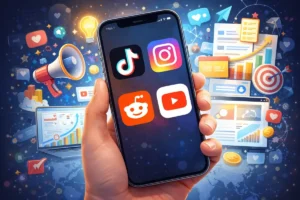
In today’s landscape, ranking well means showing up on every relevant platform, not just Google search. Social-first ranking strategies recognize that people discover brands on social media, forums, and AI tools as much as on websites. For example, Google’s results now often include TikTok clips, Instagram carousels, and Reddit discussions. Search Engine Land notes that Google’s AI Overviews (introduced in 2024) pull from TikTok, Reddit, YouTube and other social sources. In short, the line between “search” and “social” is blurring.
Consider these key trends:
-
Multi-Platform Journeys: Consumers frequently move across 11 or more sources (search engines, social apps, forums, etc.) during research. Your brand has to meet them on all those channels.
-
Trust in Community Content: Forums like Reddit now host first-hand reviews and discussions. Search algorithms and AI models pull these “unfiltered opinions” into results. Ignoring these platforms can leave your brand invisible.
-
Video is Vital: Short-form videos (TikTok, Instagram Reels, YouTube Shorts) aren’t just entertainment. They’re a high-impact discovery surface; Google prominently features video snippets and even AI summaries of video content.
-
Holistic SEO: SEO works best when digital PR, social media, and community insights align. As experts note, SEO becomes much more powerful when these elements “work together”.
Modern SEO now feels like broadcasting on multiple channels at once. The table below contrasts traditional SEO with a social-first approach:
| Aspect | Traditional SEO | Social First Ranking Approach |
|---|---|---|
| Focus | Keywords and backlinks on your site | Social engagement, community content, PR |
| Channels | Owned website, blogs, search results | Social platforms (TikTok, YouTube), forums, AI Overviews |
| Content Types | Long-form articles, static pages | Videos, short posts, user reviews, news stories |
| Ranking Signals | On-page optimization, editorial links | Social buzz, brand mentions, AI citations |
About 96.9% of internet users in major global markets use at least one social network each month, spending over 18 hours per week on social media. A Social First Ranking approach requires that your brand appears across every channel, tying them together for maximum impact. In short, a Social First Ranking approach ties together all those channels – with PR and content – to make sure your brand is visible everywhere people search.
Digital PR: The Key to Social First Ranking Success
Digital PR sits at the heart of any Social First Ranking approach. Digital PR is essentially the modern upgrade of traditional PR — built for a world where people discover brands via social media and AI answers. It’s about creating stories, data, and expert content that earn attention on credible sites, which in turn boosts your SEO. Unlike old-school PR, digital PR focuses on online visibility and the SEO value of every mention.
For social-first SEO, digital PR plays a central role by feeding the channels that search and AI tools care about. When your brand publishes fresh surveys, expert interviews or detailed studies, it gives search engines and language models something authoritative to find and cite. For example, NP Digital reports that a press release with media coverage generated AI Overview citations in just a few days — showing how quickly authoritative content can influence search results. In short, digital PR is a core element of Social First Ranking strategies.
Some key benefits of Digital PR:
-
High-Quality Backlinks: Getting featured on reputable publications earns powerful backlinks. These editorial links tell Google your site is authoritative.
-
Stronger Authority (E‑E‑A‑T): Expert commentary and media mentions bolster your expertise and trustworthiness. Google’s E‑E‑A‑T framework favors brands known for authoritative content.
-
Increased Visibility: Each mention on a media site puts your brand in front of new audiences, driving referral traffic and brand awareness.
-
Fuel for AI and Search: When AI models crawl the web, they favor sources that are reliable and up-to-date. Digital PR provides exactly that (data, expert quotes, fresh stories), so AI tools are more likely to surface your brand in answers.
Globally, governments and public institutions are also investing in digital transformation and credible online communication. For example, India’s Ministry of Electronics and Information Technology highlights national digital initiatives and trusted digital infrastructure on its official portal. Such institutional digital ecosystems reinforce how authoritative online presence and verified information sources play a growing role in search visibility and trust.
In a true Social First Ranking approach, PR, social content and on-site SEO all work together. Digital PR builds the narrative across social feeds, forums and news outlets so that search and AI can pull your brand into the conversation. Put simply, succeeding at modern SEO means adopting a Social First Ranking mindset.
AI Overviews & Generative Search
In 2024, Google rolled out AI Overviews – AI answer boxes at the top of search results. Rather than showing the traditional 10 blue links, these AI summaries pull information from across the web. Now Google surfaces answers drawing on TikTok, Reddit, Instagram Reels, YouTube and more, effectively treating social posts and videos as credible search answers.
This trend is called Generative Engine Optimization (GEO) – optimizing content for AI-driven answers (see Search Engine Land’s guide here ). In practice, it means giving AI the same authoritative data you’d share with journalists: fresh surveys, expert quotes or research findings. One campaign even saw a press release get quoted by Google’s AI within days.
SEO today means being visible wherever people ask questions. If your audience prefers video or social answers, you need to show up there. Publish useful videos, tutorials or posts (with transcripts and metadata) so that AI tools include them in their summaries.
Think of it this way: SEO isn’t just about Google.com anymore. It’s about being present on Google-in-ChatGPT, Google-on-Instagram, Google-in-Forums. The brands that win are those whose voice and data get cited across all these channels. All of this demonstrates that, under a true Social First Ranking strategy, content from every channel (social, PR, search) feeds into discovery.
Implementing a Social First Ranking Strategy
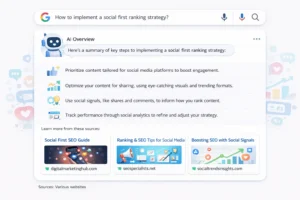
Putting a social-first plan into action involves blending content creation, community engagement, and outreach. Here’s a step-by-step workflow you can adapt:
-
Create Authoritative Content: Start with an in-depth piece – a data-driven report, industry survey, or expert guide – on your topic. This becomes your flagship content that others will cite and share.
-
Produce Multi-Format Assets: Repurpose that content into different formats. For example, publish a blog post, create a YouTube video or TikTok clip, and design an infographic. Diverse formats help you reach more audiences and rank on various platforms.
-
Engage Online Communities: Share insights from your content in forums and groups. Join relevant subreddits, answer Quora questions or contribute to industry communities. Provide value there and include links to your content when appropriate.
-
Amplify via Digital PR: Pitch your story or data to journalists, bloggers, and influencers. Aim to get featured in news sites and industry publications – earning backlinks and mentions that boost SEO.
-
Update and Link-Build: Reach out to websites covering your topic and offer your data or quotes for them to update their content. This natural link-building tactic strengthens your SEO.
-
Repurpose and Promote Everywhere: Keep the momentum by sharing snippets on social media, sending newsletters, or even running ads. For example, publish your content on a CMS like WordPress to make SEO easier, and ensure your posts include social-sharing metadata.
Each of these steps builds toward a stronger Social First Ranking for your brand. In other words, treat this as one integrated plan: your blog post, social video, community thread and press mention all point back to the same core information. Over time, this synergy improves your Social First Ranking across Google, social search, and AI tools.
Conclusion
The future of SEO is social. By combining digital PR with social-first tactics, you ensure your brand is visible wherever people search or ask questions. A solid Social First Ranking approach means your website, social media, earned media and AI are all working together.
Key takeaways:
-
For Social First Ranking, meet audiences on multiple platforms, from TikTok and YouTube to industry forums.
-
Use digital PR to fuel authoritative content that search engines and AI will cite.
-
Optimize for AI Overviews by providing up-to-date, high-quality answers that get pulled into Google’s AI summaries.
Embrace social channels to give your SEO a global boost. Now it’s your turn: start weaving social, PR, and SEO into one strategy. Share this guide with colleagues, experiment with fresh social content, and watch your brand’s visibility climb worldwide. The path to modern SEO success goes through Social First Ranking – are you ready to join the Social First Ranking movement?
Frequently Asked Questions
-
What is a Social First Ranking strategy?
A Social First Ranking strategy means optimizing for search by prioritizing social media, community content, and digital PR alongside your website. Instead of focusing only on on-page SEO, you make sure your brand appears in the places people use daily (like TikTok, YouTube, forums, etc.). Then search engines and AI tools can pick up your content from those platforms, boosting overall visibility.
-
How does Digital PR help my SEO?
Digital PR earns coverage and backlinks from authoritative online sources, which are strong ranking signals. It builds your brand’s expertise and trust (supporting Google’s E‑E‑A‑T) by getting you quoted as an expert or featured in media. The result is more people finding your site and better rankings. In fact, one case showed that a timely press release was picked up by Google’s AI overview within days, illustrating how fast PR can boost search visibility.
-
Do social media posts influence Google rankings?
Indirectly, yes. Google now includes social content in its results — for example, TikTok and Instagram videos and Reddit threads often appear in searches. While Google says likes and shares aren’t direct ranking factors, social posts that gain attention can earn links and traffic. High-engagement content is more likely to be referenced elsewhere, which helps SEO. In short, a strong social presence can amplify your SEO efforts.
-
What are Google AI Overviews, and why do they matter?
AI Overviews (launched 2024) are Google’s new AI-generated answer boxes at the top of search results. They summarize information by pulling from multiple sources across the web — including news sites, videos, and forum posts. AI Overviews matter because they’re often the first thing users see. To appear there, your content must be thorough and up-to-date. In practice, that means publishing detailed how-tos, research findings, or expert Q&As — Google can then quote your content in the AI Overview, giving you prime real estate on page one.
-
Should our brand try to post on every social platform?
Not necessarily every platform, but you should be active where your audience is listening. For example, monitor relevant communities (like Reddit or industry forums) to understand what people are asking. One expert says brands should at least listen on Reddit and only post if they have value to add. Don’t force content on a platform if it’s not relevant — instead, meet your customers on the social channels they prefer. Being present in the right social spaces ensures that your brand shows up when people search or ask questions about your products.