
Search has changed. In 2025, from New York to New Delhi, search engines do far more than match keywords – they understand meaning. Google still dominates global search (nearly 90% market share), but generative AI tools like ChatGPT and Perplexity are booming with hundreds of millions of users. Instead of a list of blue links, many queries now yield AI Overviews (the Search Generative Experience) concise, sourced answers on the SERP. In this new world, Entity Based SEO focusing on topics and “things” rather than isolated keywords wins. It aligns with how Google’s Knowledge Graph and AI models interpret queries: by entities and relationships. This shift powers more intuitive, context-rich results worldwide.
raditional SEO still matters, but now it’s the entities (people, places, products, ideas) behind content that guide both Google and AI systems. This is where Entity Based SEO becomes essential. Optimizing for these entities, by structuring content, linking relevant topics, and using schema lets sites become known to search as authoritative “things.” In practice, Entity Based SEO helps you build content around clear entity definitions, supported by related subtopics and facts, so AI engines can easily connect the dots. The result: your pages can rank for all relevant questions about that entity, even ones you didn’t explicitly target through traditional SEO.
What Is Entity Based SEO?
Entity Based SEO is an information-architecture strategy that teaches search engines what each page (and your site) is about – in terms of real-world “things” rather than just which words appear. In Google’s view, an entity is “a thing or concept that is singular, unique, well-defined, and distinguishable”. That could be a person (like “Malcolm Gladwell”), place (“Paris”), product (“iPhone 15”), company, concept, event, etc. Instead of asking “Does this page use the right keywords?” Google now asks “Is this page about the same thing the user is searching for?”.
Put simply, entities are the atomic units of meaning in modern SEO. With Entity Based SEO, when you optimize around an entity, you organize your content as a cohesive, interlinked topic cluster centered on that subject. For example, a travel site might have a pillar page on “Portugal” with clearly defined schema, plus cluster articles on “Lisbon travel tips,” “Algarve beaches,” and “Portugal cuisine.” This approach, driven by Entity Based SEO, makes your site act like a mini Knowledge Graph, connecting people, places, attributes, and related ideas.
Google and AI systems rely on these entity signals to “fill in the blanks.” Once they know your page represents a specific entity and its attributes (dates, locations, facts), they can match it to any query about that entity even ones with different wording. For example, a clear page about the Eiffel Tower (entity) will rank for searches about “Paris landmarks,” “construction of Eiffel Tower,” or “how tall is it,” because all those queries connect to the same entity via the Knowledge Graph.
How Google and AI Use Entities
Google’s Knowledge Graph (its “brain” of 8+ billion entities and 800+ billion facts) powers this shift. Technologies like BERT, MUM and Google’s Gemini model look for entity patterns in text rather than exact words. For example, if you search “jaguar,” Google infers from your context whether you mean the car, the animal, or the operating system all entities in its system. It then presents contextually rich results or a Knowledge Panel for that specific entity. This “context-first” approach means relationships drive rankings more than simple keywords. Google itself says its goal is “delivering context-first, not word-first answers”.
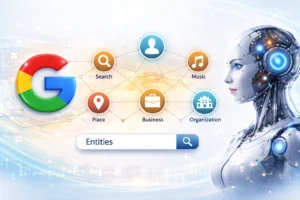
Entities also make search global. Because each entity has a unique ID, Google can link synonyms and translations across languages. This is why Entity Based SEO performs well across regions and languages, making it a core strategy for global visibility.
Finally, entities enable the new AI-powered answer formats. Google’s AI Overviews use generative models to summarize content by entity. AI tools like ChatGPT and Perplexity also rely heavily on entity recognition. This means Entity Based SEO directly impacts whether your content gets cited in AI-generated answers.
Why Entity Based SEO Matters
-
Broader Visibility: When you build clear entity-focused pages, you become visible for all relevant queries about that topic, not just ones matching specific keywords. Google “knows” your page is the authority on that entity. Single Grain puts it this way: AI engines favor pages that “resolve a topic with structured context, references, and specific sub-answers” rather than just piling up keywords.
-
Semantic Relevance: Entities reduce ambiguity. If you cover the Apple entity with context (e.g. describing iPhones, technology, Apple Inc.), Google won’t confuse your page with the fruit. It uses attributes and linked concepts to understand meaning. As Neil Patel explains, entities carry built-in relationships (attributes, categories, synonyms) that let Google rank you on related searches even if you didn’t target them explicitly.
-
AI and Voice Optimization: AI answer engines (Google’s AI, ChatGPT, voice assistants) prefer entity based seo. AI Overviews and voice Q&A boxes rely on connected structured data. SchemaApp finds that “brands that invest in Entity SEO earn greater visibility and trust in AI search results”. Even a page without any clicks can build your authority by being cited in an AI-generated answer. In practice, optimizing for entities is optimizing for these voice and AI channels.
-
Mobile and Global Reach: Entities improve mobile and multi-language search. Entity Based SEO goes hand-in-hand with Google’s mobile-first indexing and the ability to handle synonyms and translations. A single well-defined entity page (with schema and consistent terminology) helps Google’s algorithms serve useful results on phones and in any language.
-
Future-Proofing: Search is evolving toward answer engines and AI. Per Single Grain, traditional SEO practices are still important, but entity-first content now “earns better citations in AI experiences.” AI models like ChatGPT use “clean internal links, consistent terminology, and references that agree with broader web knowledge” to find answers. By contrast, outdated keyword-stuffed pages get left behind. Optimizing for entities aligns directly with Google’s vision of AI-driven, context-rich search.
Table: Keyword SEO vs. Entity Based SEO
| Aspect | Traditional (Keyword) SEO | Entity Based SEO |
|---|---|---|
| Focus | Specific words and phrases | Underlying concepts (entities) |
| Context | Limited to page keywords | Semantic context, knowledge graph links |
| Query matching | Exact terms or synonyms | Relationships & intent |
| Optimization strategy | Keyword research, on-page density | Topical clusters, schema, linking |
| Search features | Page-rank, CTR | Knowledge panels, AI summaries, voice |
Key Strategies for Entity Based Optimization
Building a strong entity presence requires structure and clarity in your content. Here are core tactics:
-
Define One Main Entity per Page: Each page should be unambiguously about one core entity. Use that entity in your title, H1, and meta tags, and mark it up with schema (e.g.
mainEntityOfPage). Search Engine Land advises this “Precision” – aligning all page signals to the same concept. For example, a blog titled “Ultimate Guide to Espresso Machines” should clearly represent the entity Espresso Machine (e.g. using Product schema). -
Topic Clusters & Coverage: Organize your site into hub-and-spoke topic clusters. Your pillar page (hub) gives an overview of the main entity, and supporting pages (spokes) dive into subtopics (features, comparisons, how-tos). SEMrush data shows sites using topic clusters can see big traffic gains. This “Coverage” approach ensures you cover all facets of an entity. For example, a page on “Electric Cars” might cluster into “Battery technology,” “Eco impact,” and “Popular models.” Each cluster page should link back to the hub and to each other with descriptive, entity-rich anchor text.
-
Schema and Structured Data: Mark up your entities! Use Schema.org types (Organization, Person, Product, Event, etc.) to label the entities on each page. Schema acts like a mini knowledge graph on the page, helping Google and AI parse exactly which parts of your content refer to your entity and its attributes. For instance, marking up a recipe with
Recipeschema tells systems it’s about a dish (the entity) and highlights ingredients, cooking time, etc. Schema is now essential: Google speakers and SEO pros at Search Central events stress that structured data is foundational to modern SEO. You can also explore official structured data guidelines here. -
Consistent Linking and “SameAs”: Entities gain strength through context. Use internal links to show relationships: link your entity page to related topics on your site, and use
sameAsreferences to trusted external sources (Wikipedia, Wikidata, Google’s Knowledge Graph URLs). This “Connectivity” tells Google how the dots connect. For example, a page on “Tesla Model S” might link to “Electric Vehicles” and “Elon Musk,” andsameAsto the Tesla company’s Wiki page. Consistent naming (using the same entity name everywhere) and author bios/personal details also reinforce authority. -
Answer User Questions (AEO): Write content that directly answers common questions about the entity based seo. Structure pages with clear question headings and concise answers. As Blue Compass notes, answer engine optimization means formatting for quick answers. For example, an FAQ section on a page about “Photosynthesis” could answer “What is photosynthesis?” and “Why is it important?” right away. Google recommends answering questions early (within a few lines) so AI Overviews and voice assistants can pull them. This AEO approach naturally reinforces your entity’s definition and makes your content snippet-ready.
-
Topical Authority and Content Depth: Go deep on each entity. Thin pages won’t suffice. Instead, create comprehensive, value-added content that covers all angles: definitions, use cases, history, FAQs, comparisons, etc.. This not only helps readers, but it floods the entity’s “node” with facts. Search engines then see you as an authority on that entity. As Single Grain advises, “your goal is durable topical authority that performs in both classic listings and AI summaries”. In practice, this means more paragraphs, lists, and sections – but each should be clear and concise, focused on aspects of the same entity.
-
E‑E‑A-T and Citations: Experience/Expertise/Authoritativeness/Trust (E-E-A-T) signals boost entity based SEO. Include author bylines with credentials, and cite credible third-party sources (studies, official sites) to support claims. For example, if discussing a medical concept entity, reference WHO or academic research. This creates a network of trust around your entity. Google and AI models favor authoritative, well-sourced content. When your content is the entity experts cite, your entity becomes a stronger hub in the Knowledge Graph.
-
Monitor and Measure Entity Signals: Track not just traditional metrics, but entity-related outcomes. Count your topic clusters, internal links, schema usage, and completed entity coverage. More importantly, watch for real evidence of entity success: knowledge panel appearances, featured snippets (Q&A, HowTo, etc.), AI Overview inclusions, and clicks to your hub pages. These show that search engines are recognizing your content’s entity focus.
SEO for AI: AEO, GEO and AI Overviews
Entity Based SEO sits at the core of AEO and GEO strategies.
-
AEO (Answer Engine Optimization): Helps AI extract direct answers
-
GEO (Generative Engine Optimization): Aligns content with AI models
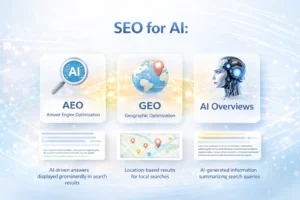
AI Overviews prioritize:
- Clear answers
- Structured content
- Entity-rich information
That means your content must:
- Define entities clearly
- Answer questions quickly
- Provide structured context
This is how Entity SEO powers visibility across AI Search platforms.
Entity Based SEO for a Global Audience
One of the biggest advantages of Entity Based SEO is its global scalability.
Entities work across:
- Languages
- Regions
- Devices
For example:
“Tokyo Tower” remains the same entity worldwide, regardless of language.
This allows brands to:
- Build one strong entity profile
- Rank globally
- Maintain consistency
Structured data further strengthens this by giving search engines clear signals about your entity.
The result: Entity Based SEO creates a unified global presence, helping your brand appear in AI Overviews, search results, and voice queries worldwide.
Conclusion
The future of search is already here and it is built on Entity Based SEO. Search engines and AI platforms no longer reward content that simply targets keywords; they reward content that understands and owns a topic. If you want your brand to stand out in Google, dominate AI Overviews, and become a trusted source across global AI Search platforms, now is the time to act. Start building entity-driven content, structure your website with clarity, and position your brand as the authority behind the topics that matter. And if you are ready to turn strategy into real growth, contact Elevatech Digital today and let our experts help you build a powerful, future-proof SEO system that drives visibility, trust, and long-term success worldwide.
Frequently Asked Questions
-
What is the difference between entity-based SEO and traditional keyword SEO?
Entity-based SEO focuses on who or what (the actual people, places, products, or concepts) your content is about, and builds a connected web of information around that entity. Traditional SEO focuses on ranking for individual keywords. With entity SEO, you structure content as a “knowledge hub” for one topic, use schema, and link related pages. This helps search engines understand the meaning and context, not just count word matches.
-
Why does Google care about entities in search?
Google’s algorithms now aim to understand intent and context. Entities are the building blocks of this understanding. By identifying entities in pages and queries, Google (using its Knowledge Graph, BERT/MUM, Gemini models, etc.) can match users with precise answers. In practice, Google prefers content that clearly defines and connects entities, because it can then deliver more relevant results and AI-driven summaries.
-
How do I optimize my content for entities?
Key steps include: pick one main entity per page and signal it through titles and schema; create topic clusters around that entity with helpful subpages; use structured data (schema markup) for things like Organization, Product, FAQ, etc. Also use descriptive internal linking (“connect X to Y”) and
sameAsreferences to authoritative sources. Answer user questions directly and add FAQs. In short, treat your site as a mini Knowledge Graph for your entity. -
What role do structured data and schema play in entity SEO?
Schema is crucial. It’s the language of search engines for defining entities and their attributes. When you add schema markup (e.g.
Organization,Person,Event,Product), you’re literally tagging which words in your content are entities and what their values are. This helps Google’s AI accurately map your content to the Knowledge Graph. Simply put, schema gives machines explicit clues about what each page means. As Google engineers note, structured data is foundational for modern SEO as search becomes more AI-driven. -
How does entity optimization help global visibility?
Entities are language- and locale-agnostic. The same entity exists in every market (for example, “Pizza” or “Eiffel Tower”), so optimizing content around it benefits searchers worldwide. Google’s translation and disambiguation rely on entity context, so your optimized page can rank for equivalent queries in different regions or languages. Also, schema (like
location,currency) lets you reach regional users (local SEO) while the entity framework ties everything to your overall brand topic globally. -
How can I tell if entity SEO is working?
Beyond traditional rankings and traffic, look for entity-specific signals: appearance of a Knowledge Panel for your brand/entity, inclusion in featured snippets or FAQs, and citations in AI Overviews or voice answers. Track the number of topic clusters you’ve built, schema coverage, and internal links per hub. If your entity-focused pages start generating answers for multiple related queries, and if branded queries trigger rich results, your entity strategy is paying off.