
Blogs

generative engine optimization (GEO)

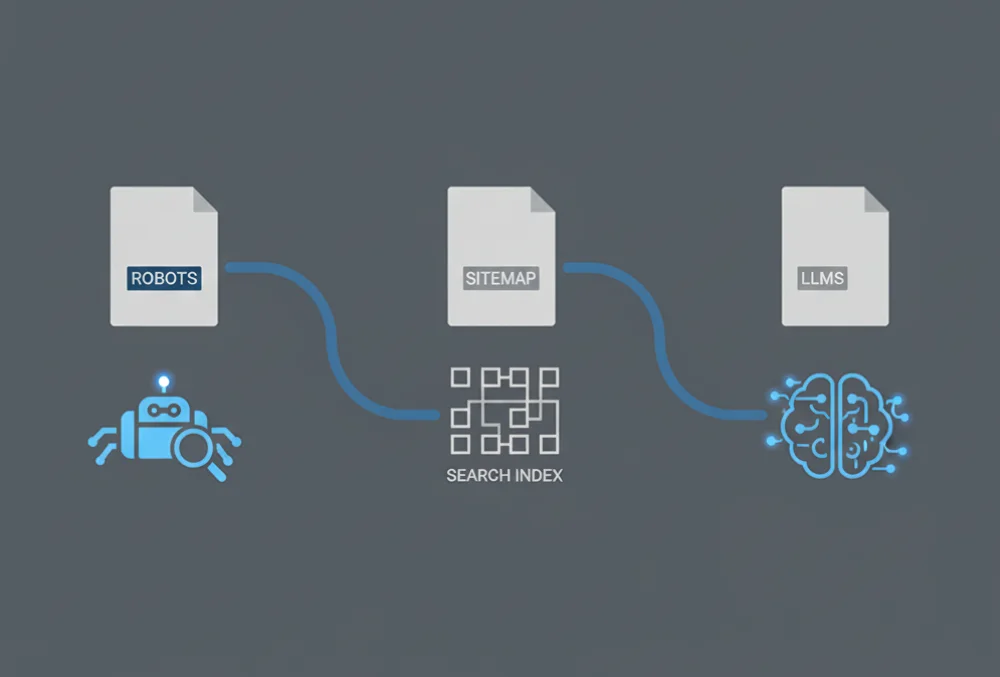
Imagine you’re sipping chai on a Mumbai local, casually asking ChatGPT or Google’s AI for the best biryani in town. Would your food blog or Delhi restaurant guide pop up as the answer? Today, generative AI search is reshaping how people find information – and our content must adapt. At Elevatech Digital, we call this generative engine optimization (GEO), essentially, SEO for the AI era. In short, GEO means structuring your content so that AI-powered engines like ChatGPT or Google’s new AI tools can understand and even cite it. Think of it as training your content to ace the AI Q&A session.

Generative search is booming in India. Bing Chat, Google’s SGE (Search Generative Experience), and other AI chatbots are leading the pack. In fact, India now has the largest ChatGPT user base in the world (13.5% of global users) – from techies in Bengaluru to students in Patna, everyone’s chatting with AI. Meanwhile, IAMAI reports 886 million active internet users in India (as of 2024), each spending about 90 minutes online daily. Most of those searches happen on mobile phones, so content must load fast and read well on tiny screens. Crucially, make it local: answer queries in Hindi or other Indic languages (57% of urban Indians prefer Indic languages), mention prices in ₹ (lakhs, crores), and weave in familiar examples (think cricket, masala chai, Bollywood). In other words, cater to Indian intent. Generative search will ask all sorts of local questions – your content should already have the answers ready.

Generative Engine Optimization vs Traditional SEO

Factor Traditional SEO Generative Engine Optimization (GEO)
Primary goal Rank high in search results (Google SERPs). Appear in AI-generated answers and summaries.
Optimization focus Keywords, backlinks, technical SEO. Clear entities, structured content, strong E‑E‑A‑T (trust).
Discovery path Search query → SERP (blue links) → Click. Prompt → AI-generated response (no click needed).

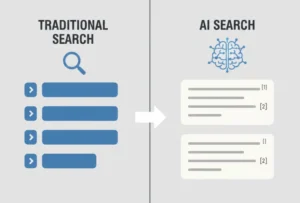
Traditional SEO is about being best on Google’s results page using keywords and backlinks. Generative engine optimization flips the script: it’s about being chosen by AI tools. As one SEO expert puts it, “traditional SEO will rank you in Google; while GEO will get your brand to appear in AI-generated results”. In practice, that means optimizing for direct answers. Search Engine Land explains it simply: “GEO helps content get selected as a source in AI-generated answers.”. So instead of just chasing clicks, you chase clarity and authority – making your content the first thing an AI wants to quote.

Key Strategies for Generative Engine Optimization

  • Map Your AI Topics: Identify 5–10 core themes you want to dominate (e.g. “generative AI trends”, “mobile SEO tips”). List all the questions users ask about them and how they compare options. For example, if you blog about travel, chart queries like “What’s the best monsoon getaway in India?” or “Himachal vs Kerala for honeymoon?”.
  • Answer-First Content: AI favours content with immediate answers. Start sections with a concise response under a question-style header, then expand. Use short intros (2–3 lines) followed by a TL;DR bullet or FAQ-style answer. Breaking content into numbered steps or bullet lists makes it easy for AI to extract points. For example, to optimize for “What is generative engine optimization?” immediately define it in simple terms, then elaborate.
  • Question-Based Headings: Phrase your headings as user questions (“How do I do X?” or “What is Y?”) and directly follow them with clear answers. Explicit Q&A headers help AI recognize and use your content in responses. Avoid generic headings; instead of “SEO Tips,” write “How can I optimize SEO for AI search?” with a straightforward answer.
  • Structured Data & Markup: Use schema markup (FAQ, HowTo, Article, Organization, etc.) to clarify your content’s context. Structured data is like GPS for AI: it signals exactly what your page contains. For instance, add FAQ schema for real Q&A sections, or an Article schema to highlight key topics. This boosts your chances of being picked as a trusted source in AI summaries.
  • E‑E‑A‑T (Trust Signals): Build expertise into the text. Cite reputable sources, show author credentials, and include concrete data. AI models reward “trustworthy, well-cited content”. Mention real facts (e.g. “According to RBI data…”, “IAMAI reports), and use personal anecdotes or case studies to demonstrate experience. The more your content reflects expertise and trust, the more likely AI will quote it.
  • Originality & Local Flavor: Stand out with unique insights. Don’t just rehash generic info; offer fresh analysis or data. For example, if you mention prices, use INR symbols and local terms (“₹50,000” instead of $600). Discuss India-specific angles, like “GST rates” or “Navratri celebrations,” to appeal to Indian users and AI alike. Adding cultural references (cricket stats, film names, local slang) makes your content more relevant and “sticky” for AI answers.

Writing for Humans (and AI)

Behind every AI answer is a human-crafted text. Keep your writing lively and varied so it feels authentic. Alternate short punchy sentences with longer, detailed ones – a mix of “burstiness” keeps things natural. Feel free to inject a bit of humor or a relatable story to signal a human touch. For example, instead of dry bullet points, you might write: “Think of SEO as a stage performance with choreographed moves. Generative SEO is like freestyle rap – creative, in-the-moment, and always ready to surprise.” Small local witticisms (about monsoon traffic, Mumbai local trains or the latest Bollywood hit) can make your content memorable.

Also, leverage visuals and formatting. A well-placed infographic or table (like the one above) can become an easy reference for AI. When information is organized clearly, AI overviews are more likely to pick it up. In practice, that means bolding key phrases, using concise bullet lists, and even including charts if they present useful facts. Just as a GQ article might use a glossy image to draw readers in, think how an AI would ‘read’ your page: clear headings, images with alt-text, and rich snippets (like a ₹ symbol) all help AI parse and trust your content.

Local SEO Meets GEO

In India, the scale is huge. With 886 million internet users, even a niche query can involve millions of potential readers. Generative search here must respect local nuances. Use India-specific examples and units (lakhs, crores), mention regional festivals or cricket teams, and include Hindi or regional keywords alongside English. Even on large sites, consider micro-content: short “mini-blog” answers in Hindi or Tamil for common local questions. And remember mobile-first: ensure content is concise and smartphone-friendly. A long, jargon-heavy article might get skipped on a phone screen, whereas a crisp, well-structured answer is prime AI food. As one AI expert put it, “Search engines are becoming answer engines… AI is becoming the gatekeeper of trust.” The winners will be those who appear in AI answers and get recommended, not just ranked.

Conclusion

We’re living in a new era of search. Generative engine optimization is the bridge between your content and the AI algorithms that people increasingly rely on. To recap: write crisp, answer-focused content; build trust with facts and experts; format everything for easy AI parsing; and localize for the Indian audience. It’s not enough to rank on Google – you want to be cited by the AI friends of those Google-searchers.

Now it’s your turn: put these strategies into action and watch AI deliver your content. Drop a comment below with your experiences or questions. If you’re curious how Elevatech Digital can elevate your AI-SEO game, reach out – we’d love to help you get picked in those AI-generated answers.

Read Also: Local SEO vs Traditional SEO: What Local Businesses Need to Know

FAQs About Generative Engine Optimization

  • What is generative engine optimization (GEO)?

    Generative engine optimization (GEO) is like traditional SEO’s tech-savvy cousin for the AI age. It means crafting and structuring your content so that generative AI engines (ChatGPT, Google’s Bard or SGE, Gemini, etc.) understand and use it when answering queries. In practice, GEO focuses on clear, direct answers, strong trust signals, and structured data, rather than just keywords and backlinks.

  • How is GEO different from regular SEO?

    Traditional SEO optimizes for search result rankings (blue links on Google), while GEO optimizes for AI-generated answers. In SEO you chase clicks; in GEO you chase citations. For example, SEO might target “best cheap phone”, but GEO wants you to answer “Which is the best phone under ₹10,000?” clearly at the top of the page so an AI can quote it. Think of SEO as a referral system; GEO is about being the answer.

  • How do I optimize my content for generative AI search?

    Start by structuring content for easy reading: use question headings and immediately answer them, employ bullet lists, and include a short summary or TL;DR. Add FAQ schema and other structured data so AI can parse your page. Build trust by citing authoritative sources and showing expertise. Also, localize your content – use INR currency, local examples, and relevant languages. In short, focus on clarity, credibility, and context. (See the bullet list above for detailed steps.)

  • Is SEO dead now that AI search is here?

    Not at all – SEO is evolving. The fundamentals (good content, relevance, authority) still matter. What changes is how visibility works. You’ll still want to rank well on Google, but you also want to be chosen by AI. Treat GEO as an extension of your SEO strategy – write for humans and for AI. In fact, combining SEO best practices with GEO tactics (like structured answers and rich data) gives you a competitive edge.

  • How should Indian businesses approach GEO differently?

    India’s diversity means GEO has some extra layers. Mobile-first design is a must (test voice queries in Hindi and English). Create content in regional languages for local markets – remember, many Indians prefer Indic languages online. Use local currency (₹) and cultural references. For example, an auto-rickshaw service might optimize content for “best auto waale near me” in Hindi, while a bank might emphasize “Rs 1 lakh fixed deposit interest”. Essentially, mirror the bilingual, mobile lifestyle of your audience so AI can match them to you.

Local SEO vs Traditional SEO

Imagine you run a chic cafe in Delhi or a corner grocery in Chennai. How do you make sure nearby customers find you online, not a chain store in Mumbai? That’s where Local SEO comes in. Unlike “traditional” or broad SEO, which aims at national/global visibility, local SEO hones in on nearby searches – think “bakery near me” or “AC repair in Pune”. In India today, this distinction is crucial. With over 800 million internet users in the country (and counting), most of whom are on mobile, consumers routinely search for products and services right on their streets. Rather than casting a net across India, local SEO targets the customers who are already in your neighborhood, ready to buy.

In this article, we’ll unpack exactly what Local SEO is, how it differs from traditional SEO, and why Indian small businesses can’t afford to ignore it. We’ll sprinkle in tips, stats, and even a table to compare strategies. Ready? Let’s dive in and crank up your local Google game.

What is Local SEO (and Why Does It Matter)?

Local SEO is all about making your business visible in geographic-specific searches. In practice, it means optimizing your online presence so that when someone nearby Googles for your product or service (e.g. “boutique near me” or “lawyer in Kolkata”), your shop shows up. Key elements include creating and optimizing a Google Business Profile (formerly Google My Business), earning local reviews, and using location-based keywords.

Traditional SEO, by contrast, is the broad approach most people think of: ranking well on Google nationally or globally. It relies on content marketing, backlinks, and overall website authority to draw visitors from anywhere. But for a local store or service provider, traditional SEO can be like shouting “ice-cream shop!” at a global audience in a language only half of them understand. Many will not convert.

In India’s mobile-first market, local SEO often outperforms traditional tactics. For example, studies show that when shoppers research products, 96% of Indian buyers use their phones before buying. Moreover, 85% of them even use their smartphone in the physical store to compare prices or reviews. In short, your customers have the world (and your neighborhood) in their pocket – your job is to pop up first in their search.

Key Differences: Local SEO vs Traditional SEO

To see how they diverge, consider this side-by-side overview:

Feature Local SEO Traditional SEO
Target Audience Customers in a specific city/area National or global audience
Keyword Focus Location-specific (e.g. “car wash in Pune”) Broad keywords (e.g. “best car wash”)
Search Results Google Map Pack, local listings, Google Business Profile Organic search results pages (SERPs)
Critical Factors Google Business Profile, online reviews, local citations, local content Backlinks, domain authority, comprehensive content
Competition Level Other local businesses in your region All businesses worldwide vying for top spots
Cost & ROI Generally lower cost, higher ROI Higher cost (e.g. ₹1.6L–8L/month), lower local ROI
Search Intent Highly intent-driven (location+service) More informational or broad-intent

For instance, one marketing group compares two scenarios: ranking #1 nationally for “plumbing services” might bring 10,000 clicks – but 99% of those users can’t hire you because they’re out of service range. By contrast, ranking #1 locally for “emergency plumber [your city]” could yield 200 clicks with 60% calling you immediately. The math is clear: fewer but more qualified leads are usually better for a local business.

Likewise, local SEO often costs less. Agencies estimate that national SEO campaigns might need ₹1.6 lakh to ₹8 lakh per month, whereas targeted local campaigns can start around ₹40,000–2.4 lakh. And because the audience is so highly targeted, ROI tends to be higher. In India’s small-business landscape, every rupee counts – and local SEO tends to stretch each rupee further.

Why Local SEO is Crucial for Indian Businesses

Consider how Indians shop and search today. An RBI survey (2025) shows a boom in digital access: 97.6% of urban youth (age 15–29) and 95.5% of rural youth own smartphones. In fact, 85.5% of all Indian households have at least one smartphone, and 86.3% have home internet. Put simply, your potential customers – from Bandra to Bhubaneshwar – are online and mobile.

What does this mean for a local store? When customers are out and about, 30% of mobile searches include a location (think “near me” or “in Bangalore”). Even more striking: 76% of local smartphone searches end in an in-store visit within a day, and 28% result in a purchase. In plain terms, nearly 3 out of 4 local searches lead someone straight to a business’s door, and 1 in 4 lead to a sale. These are high-intent customers who are ready to spend.

Source: A 2026 local SEO study found that 42% of all local searches click on the Google Map Pack (the list of three local businesses Google shows first), and many users then head to Google Maps or call directly. To capture these customers, your shop must appear in those map listings. In India’s hyper-competitive cities, missing the map pack is like hiding your store in a busy market alley.

Another trend: voice and “near me” searches are exploding. ThinkWithGoogle reports a 270% year-over-year jump in voice queries in India, fueled by local language speakers. Anecdotally, searches like “pizza near me” have grown 500%+ in recent years. Hindi and other regional-language queries are surging, so optimizing for local phrases (even in Hindi script or bilingual content) can give you an edge. As smartphones become multilingual search hubs, local businesses who speak the local language (literally) win.

Finally, consider customer behavior: 96% of Indian shoppers research online before buying, and 85% use their phone in-store. This means visibility isn’t optional. If your hardware store isn’t in the top local search results, chances are your competitor is, and that’s who the customer will call.

How to Master Local SEO in India

Now that we’ve sold you on why local SEO matters, let’s get practical. Here are the core local SEO tactics your Indian business should implement:

  • Claim & Optimize Your Google Business Profile: Think of this as your digital storefront. Complete every field – business name, address, phone, website, hours, etc. Add high-quality photos of your shop and products. Google reports that businesses with a 100% filled profile get up to 10× more customer actions (calls, clicks, visits). Use relevant categories (e.g. “Vegetarian Restaurant,” “Auto Repair Shop”) and keep details updated (especially hours during festivals or off-days). A well-optimized profile makes you a star in the map pack.
  • Maintain Consistent NAP Across the Web: NAP stands for Name, Address, Phone. List these exactly the same on your website, Yelp, JustDial, Sulekha, IndiaMart, directories, and social profiles. Even minor mismatches (like “Rd.” vs “Road”) can confuse Google and split your reputation. Audit your listings now: Google your business name + city to see where it appears. The Truehost guide suggests fixing any mismatches during a “Day 3-4 audit”.
  • Gather and Manage Reviews: Reviews are gold in local search. In fact, over 75% of consumers always read online reviews for local businesses. Encourage happy customers to leave Google reviews (or JustDial reviews, which Indian users trust). Respond promptly to all reviews – even negative ones – in a polite, helpful way. High ratings (4–5 stars) and frequent reviews boost your local rankings. For example, two local roofers with identical services saw radically different call volumes simply due to reviews: the one with 4.8 stars and 200+ reviews got 80% of the calls, while the lower-rated one struggled.
  • Use Local Keywords: On your website and in content, sprinkle location-specific phrases naturally. Instead of just “best tailoring shop,” try “best tailoring shop in Thane” or “tailor near me.” Include neighborhood names, city names, and local terms. If you advertise in Hindi or another regional language, also optimize for those searches (e.g., “दिल्ली में ब्यूटी पार्लर” or “bangalore lip care shop”). Also, create content around local topics: blog about a festival special item you made, or how your shop celebrates Diwali – these show Google you’re relevant to that locale.
  • Mobile-Friendly Website: Given India’s mobile dominance, your site must load fast on phones. Google’s mobile-first indexing means slow, clunky sites lose visibility. Compress images, use a clean design, and ensure buttons are thumb-friendly. Tools like Google PageSpeed Insights can help. Remember, 54% of smartphone users search for business hours and 53% for directions, so make that info prominent on your site’s mobile view.
  • Structured Data (Schema Markup): Help Google understand your details. Use LocalBusiness schema on your HTML to mark up your address, phone, business hours, and prices (e.g., ₹₹ for price range). This can lead to rich results (like your hours showing directly on search) and is a recommended practice for any SEO-conscious site.
  • Local Link Building & Citations: Gain mentions from local news sites, blogs, and community portals. Sponsor a local event, and get listed on that event’s website. Network with nearby shops for cross-links (e.g., a café listing on a local food blog). Every relevant local backlink sends signals to Google that you’re an authority in your city.
  • Monitor and Analyze: Use Google Analytics and Google Search Console to track how much traffic comes from your city vs elsewhere. Pay attention to Google Business Profile insights (calls, direction requests, website clicks from the profile). If you’re getting visitors from far-off places that you can’t serve, refine your keywords. On the flip side, if local engagement is rising, double down on what’s working.

In short: follow the “7-day plan” that savvy SEO guides recommend. For example, one SEO checklist advises Day 1–2: claim and fill your Google Business Profile; Day 3–4: fix all online listings and NAP; Day 5–6: ask 10 happy customers for reviews and respond to them; Day 7: analyze local competitors in Google’s Map Pack and learn from their strengths.

By doing these, you start “owning” your neighborhood on Google. Picture this: someone searches “best chai near Colaba” and your shop pops up with glowing reviews on Google Maps – that’s the power of local SEO.

Overcoming Local SEO Challenges

It’s not all smooth sailing, so watch out for common pitfalls:

  • Trying to Rank for Everything: Don’t be the one who tries to rank nationally for generic terms. As one SEO strategist warns, “the Italian restaurant trying to rank for ‘best pasta’ nationally… Stop trying to be everything to everyone”. If you’re a local eatery, aim for “best [your city] paani puri” instead of “best paani puri in India.” Narrow, local focus beats broad ambition any day.
  • Inconsistent Info: Even a small typo in your address on one site can split your “local footprint.” Tools like Moz Local or manual checks (Google your NAP) are vital to keep things consistent.
  • Neglecting Reviews: Fake or no reviews can tank your local visibility. Always strive for genuine, recent reviews. Platforms like JustDial are big in India; make sure you’re listed there with good ratings.
  • Multiple Locations: If you have more than one outlet (say in Delhi and Bangalore), treat each separately. Create individual Google Business Profiles and local pages on your site for each. Don’t mix “Lajpat Nagar store” info into your “Karol Bagh store” listing.
  • Outdated Data: Keep an eye on Google’s local algorithm changes. For example, since Google now uses mobile-first indexing, a non-mobile site will lag. Keep learning via SEO blogs and guides to stay ahead.

Mobile-First and Voice Search: The New Frontier

In India, mobile-first isn’t a trend – it’s reality. Nearly 80% of India’s web traffic comes from mobile devices. If your site isn’t blazing-fast on 4G (or even 3G in tier-2/3 cities), customers will bounce. Also, Indians love voice search, especially in local languages. Statistics show over 58% of consumers use voice to find nearby businesses. To optimize for voice:

  • Use conversational, long-tail phrases in your content (e.g. “where is the nearest pharmacy open now”).
  • Provide Q&A on your site that directly answers common questions.
  • Ensure your business name and category are clear, as Siri/Google Assistant read from your Google Business Profile.

Keep in mind, India has 22 official languages and thousands of dialects. A café in Tamil Nadu might benefit from having part of its site or social posts in Tamil. Google’s algorithms understand Indian English with code-switching, so a title like “Best dosa in Chennai – டோஸா” could be an edge. Cater to your local audience’s language and search style.

Conclusion

Local SEO and traditional SEO each have their place, but for neighborhood businesses in India, local is where the magic happens. By tailoring your strategy to local intent – optimizing your Google Business Profile, earning reviews, and focusing on mobile and local keywords – you put customers in your area first.

Remember the numbers: over 85% of Indian households are online, 76% of “near me” searches lead to store visits, and a strong local presence can dramatically boost footfall. Your competitors are already online (64% of small businesses have some local SEO presence). Don’t let them own your own neighborhood’s attention.

So what’s next? If you’re running a local business – shop, clinic, startup, anything – start with your Google Business Profile today. Complete it fully. Check your name, address and phone everywhere. Ask for a few new reviews. These simple steps can begin driving more calls, clicks and walk-ins.

Your customers are searching now. Will they find you?

Read Also: What is Answer Engine Optimization: How to Rank for AI & Voice Search

Frequently Asked Questions (FAQs)

  • What exactly is the difference between Local SEO and traditional SEO?

    Local SEO focuses on location-based searches, optimizing for Google Maps and local directory listings. It uses geo-keywords (city names, “near me”, etc.) and leverages tools like Google Business Profile. Traditional SEO aims for broad reach and high rankings in organic search nationwide, focusing on general keywords and domain authority. In practice, local SEO drives nearby customers through your door, while traditional SEO drives general website traffic from a wide area.

  • How can a small business improve its Local SEO ranking quickly?

    Start by claiming your Google Business Profile and filling it out 100% (photos, services, timings). Ensure your NAP (Name, Address, Phone) is identical across all online directories (JustDial, Sulekha, etc.). Then actively gather customer reviews and respond to them. Use local keywords on your website (e.g., “best tailor in Pune”). These steps often yield noticeable results in weeks, not months.

  • Is it worth investing in Local SEO for a small shop in a tier-2 city?

    Absolutely. Internet and smartphone penetration are surging in smaller cities too. Even if your audience is local, the fact that a majority of people search online before buying means local SEO can have a huge impact. Think of it as digital word-of-mouth for your neighborhood.

  • What are “citations” and do they matter in India?

    Citations are online mentions of your business name, address, and phone number (NAP), usually on directories like Google Maps, Yelp, IndiaMart, and local business listing sites. In India, sites like JustDial, Sulekha, and YellowPages act as citations. Consistent citations help Google verify that your business is real and at a fixed address, improving local rankings.

  • How do Google reviews affect Local SEO?

    Reviews are critical. A higher star rating and more reviews make your business more appealing and can boost your visibility in local search. Google’s algorithm favors businesses with recent positive reviews. Encourage satisfied customers to leave reviews, and always respond politely to feedback.

Answer Engine Optimization

Voice assistants like Google Home are the new search gatekeepers in Indian homes. Imagine asking your phone or smart speaker a question and getting an instant answer – that’s the essence of answer engines. Voice assistants like Google Home, Alexa, and Siri have quietly become the new gatekeepers of information, especially in India where millions of people speak in dozens of local languages. At Elevatech Digital in Rajkot, I’ve seen how a friend in Ahmedabad asking “best filter coffee near me” expects a precise spoken reply, not a list of web pages. This shift from links to instant answers is at the heart of Answer Engine Optimization (AEO) – our specialty. In this guide, we’ll explore how AEO works and show you how to optimize your content to become that answer on devices from Mumbai to Vadodara. And that’s exactly what Answer Engine Optimization is all about – making your content the answer in any search.

The Voice & AI Search Revolution in India

Search habits are changing fast in India. Roughly 15% of internet users (about 140 million people) already rely on voice-based commands for tasks like navigation and searches. With over 886 million Indians online by 2024, and more than half preferring content in their native languages, conversational queries are booming. Voice-driven shopping is big too: India’s voice commerce market was roughly $1.6B (~₹12,000 crores) in 2024, showing how fast adoption is growing. Generative AI tools (ChatGPT, Bard, Google’s SGE) are further reshaping search – many queries now yield a direct answer from AI or a featured snippet instead of a list of links. For businesses in India, mastering Answer Engine Optimization is now critical to staying visible on these platforms. Your content needs to be the answer these systems speak out loud.

What Is Answer Engine Optimization (AEO)?

What Is Answer Engine Optimization (AEO)?

Smartphone showing an AI assistant interface on screen, illustrating voice search usage. Answer Engine Optimization (AEO) is essentially how you reshape SEO for the AI age. Instead of chasing clicks through keywords and backlinks alone, AEO means structuring your content to directly answer user questions. For example, if someone asks “ડિજિટલ ઇન્ડિયા એટલે શું?” (meaning “What does Digital India mean?”), traditional SEO might just try to rank an article about the Digital India initiative. AEO goes further: it formats that article so the very first lines (and any bullet points or tables) give a clear, concise definition of Digital India. In short, AEO makes your page the answer that Siri, Alexa or Google’s AI delivers – often via featured snippets or spoken responses.

AEO isn’t about re-inventing your entire site – it’s about restructuring smartly. For example, one core strategy is to focus on natural, question-based queries: use Google’s “People Also Ask” or voice autocomplete to find the exact phrases people speak. Then write your headings in Q&A style. Another tactic is to lead with a concise answer in each section: voice assistants and AI favor short, 30–50 word responses. Use bullet or numbered lists and tables wherever possible, because these formats are often quoted verbatim by AI. Implement FAQ schema on your pages so search engines know you’re providing direct answers. In practice, these are all facets of an effective Answer Engine Optimization plan: making your content easy for AI to parse and present.

Top Answer Engine Optimization Strategies

You don’t need to start from scratch – just restructure your content smartly. Below are five core Answer Engine Optimization strategies to help your site become the go-to answer:

  • Target conversational queries: Research real questions people ask (in English and local languages) and use them verbatim in your content. Use Google’s “People Also Ask” or voice autocomplete to discover these queries. Write section headings in the form of those questions, aligning with how users speak.
  • Lead with concise answers: Put the main answer in the first sentence or two. Skip long-winded introductions – voice assistants need a quick, authoritative response. If an answer takes too many words, the assistant might move on. Short, direct answers (around 30–50 words) get picked more often.
  • Format for featured snippets: Structure step-by-step guides or facts in bullets, numbered lists or tables. Search features love lists. For example, if someone asks “how to pay income tax,” a numbered list of steps or a table of tax rates can be quoted verbatim by Google or Alexa.
  • Use FAQ schema and rich data: Add FAQ sections with Schema.org markup. This explicitly tells search engines your page has a question-answer format. Also optimize other rich results (like LocalBusiness info, products or reviews) so that any AI answer box can pull exact details (addresses, hours, prices) from your content.
  • Optimize for voice search: Voice queries are conversational and often local, so write like people speak. Include long-tail phrases and mention locations (e.g. “near me,” city and landmark names). Also ensure your site is mobile-friendly and loads quickly – Google won’t voice-read answers from a slow page. Fast mobile pages (like AMP or responsive sites) give your answers a better chance to be served when users are on the go.

Instead of a costly ad campaign, implementing AEO is low-cost – answering user questions on your site is nearly free compared to spending lakhs of rupees on ads. Each of these tactics builds your Answer Engine Optimization framework, making AI and voice assistants more likely to choose your content.

Local SEO and Regional Nuances

India’s search landscape is multi-lingual and fiercely local. Optimizing for voice and AI means literally speaking the user’s language. About 57% of Indians prefer content in their native tongue. If your audience speaks Hindi, Tamil, Gujarati or any other regional language, add FAQs and Q&A content in that language. For example, a bakery in Rajkot might have an FAQ in Gujarati about its specialties. Make sure your Google My Business listing is complete (address, phone, hours), and include city or neighborhood names in your answers – voice queries often use terms like “near me” or local landmarks.

Finally, mobile-first is crucial: over 90% of voice searches happen on smartphones. Google won’t read answers from a slow page, so make sure your site loads quickly even on budget devices. By combining Answer Engine Optimization with local SEO in India, even small-town shops with modest budgets can appear in voice search answers without extra ad spend.

Read Also: Top Search Engine Marketing Trends You Can’t Ignore for Better ROI

Conclusion

A smartphone home screen displaying AI assistant app icons, symbolizing voice and AI search in daily life. As India’s internet population grows, the future of search is clearly conversational – people now expect clear, instant answers via voice or AI chat. Answer Engine Optimization helps you win that game: by structuring your content into crisp, authoritative answers, you make sure Siri, Alexa or Google’s AI cites your site as the source. Even small efforts (like adding an FAQ snippet or summary box) can pay off greatly. Whether you run a boutique in Bangalore or a startup in Rajkot, optimizing for voice and AI search is no longer optional – it’s essential. Our team at Elevatech Digital can help your brand speak the user’s language in this new era.

FAQs About Answer Engine Optimization

  • What is the difference between Answer Engine Optimization (AEO) and traditional SEO?

    Traditional SEO focuses on ranking pages and driving clicks. Answer Engine Optimization (AEO) means structuring your content to be the direct answer in voice and AI searches. AEO usually involves formatting content as a clear Q&A or FAQ so that assistants like Siri or Alexa can pull your answer verbatim. In effect, AEO is the next evolution of SEO for an AI-driven world.

  • How do I optimize my content for voice search in India?

    Think in full questions. Write content in conversational style and include local language queries where relevant. For instance, instead of an article just about “LPG subsidy,” add a Q&A titled “How to apply for LPG subsidy in Delhi?” with a direct answer. Mark it up with FAQ schema and ensure your site is mobile-fast. These practices align with the principles of Answer Engine Optimization and boost your chances to appear in voice results.

  • Why is AEO important for Indian businesses?

    Voice and AI search are growing fast in India (about 15% of users already use voice commands). People often ask questions in Hindi, Tamil or English, expecting instant answers. If your content is optimized with Answer Engine Optimization, your brand can be that answer. For example, a Mumbai restaurant optimized with local Q&As might be cited when someone asks, “best vada pav near Colaba.” Without AEO, that opportunity is lost to competitors

  • Are there any tools that help with AEO?

    Many standard SEO tools still apply. Google Search Console and Analytics can show which questions users are asking. Keyword research tools can suggest conversational phrases. Google’s Data Highlighter or schema plugins (like for FAQ schema) make markup easier. In India, transliteration tools (to add Hindi/Marathi content) can be useful. However, the core of AEO is content strategy: clear answers and structured format, not special software.

  • How do I measure the success of Answer Engine Optimization?

    It’s not as direct as tracking clicks, but there are clues. Check Google Search Console for impressions of question-based queries or featured snippets. See if your Q&A pages get more traffic over time. You can also test voice assistants directly – ask some of your FAQs and see if they cite your site. More branded voice queries or direct answers in search results are signs your AEO is working.

Search Engine Marketing Trends

In today’s fast-paced digital arena, staying ahead of the curve is non-negotiable. As a young professional in India, you know that merely running ads isn’t enough; you need smarter strategies. That’s where the latest Search Engine Marketing (SEM) trends come in. When executed well, SEM can deliver jaw-dropping returns – studies show an average ROI of around 250%. Imagine turning ₹1 lakh into roughly ₹2.5 lakhs – that’s the kind of power we’re talking about. In this post, I’ll walk you through the hottest SEM trends, sprinkled with local insights and a dash of Elevatech Digital wisdom. Think of it as the digital marketer’s playbook for India 2025: from AI-powered ad bids to hyper-local voice searches, we’ll cover it all. Ready to elevate your campaigns? Let’s dive in.

1. AI-Powered Automation: Smarter Bids, Higher ROI

Artificial Intelligence and machine learning are rewriting the rules of paid search. Gone are the days of manual bid tweaks and gut-feel targeting. Modern SEM platforms (Google Ads, etc.) now offer automated bidding, predictive targeting, and even dynamic ad creative, powered by AI. These tools analyze massive datasets – things like your users’ search history, time of day, device type – to automatically raise or lower bids where it counts.

For example, imagine you set a modest ₹10,000 daily budget. AI algorithms can shift funds in real time to high-converting keywords or peak hours, and dial back on underperformers. One UpGrad guide notes that automated tools monitor CTR, conversion rate and ROI live, so marketers can “make informed adjustments in real time”. In practice, this means less wasted spend and more sales – translating directly to a fatter ROI.

Bullet points: AI/Automation benefits

  • Dynamic Bidding: AI adjusts your bids instantly based on performance data, meaning your ₹1 keeps multiplying the smart way.
  • Creative Optimization: Some platforms auto-generate and test multiple ad headlines and visuals, so the highest-CTR combo wins.
  • Audience Segmentation: AI can micro-target users by language, geography or even intent, ensuring your ads hit the sweet spot.

These capabilities are already the baseline for global campaigns, and Indian marketers are jumping on board. At Elevatech Digital, we see AI-driven ads as table stakes: it’s like having a savvy assistant who never sleeps, constantly optimizing your PPC. Embrace these tools, and you’ll spend less time on spreadsheets and more time strategizing.

2. Voice Search Optimisation: Speak the Search Engine’s Language

“Hey Siri, best chai in Mumbai?” Voice search isn’t just a novelty in India – it’s a revolution waiting to be harnessed. With over 700 million smartphone users and affordable data plans, India is leading the global charge into voice-first queries. Local languages make this even more explosive: roughly 65% of Indian users now prefer voice search because it’s fast and hands-free.

For SEM, this means rethinking how you bid on keywords. Conversational, long-tail phrases are key. Instead of targeting “best chai Mumbai,” savvy marketers bid on the kind of question someone might actually speak: e.g. “Mumbai mein sabse accha chai ka pitara?” (Colloquial Hindi) or “best street food in Delhi” spoken in Hinglish. By optimizing your campaigns for these natural phrases, you tap into a massive, ready-to-buy audience – especially in Tier-2 and Tier-3 cities, where voice in local dialects is booming.

Voice AI is evolving: voice assistants like Google Assistant and JioSaavn are learning our accents and slang. Soon, a Marathi-speaking farmer or a Punjabi driver will find your ad simply by asking for your product out loud. Brands already using voice search marketing (think Flipkart’s voice shopping, HDFC’s voice banking) report richer engagement. Kumar Saurav from AdCounty Media says voice commerce in India is growing ~34% annually. The takeaway? Don’t just bid on “term insurance online” – bid on “budget-friendly term insurance batao”. Speak your customers’ language (literally), and watch ROI climb.

3. Mobile-First Strategies: Fast, Friendly, Frictionless

Let’s face it: mobile rules India’s internet. Over 80% of web traffic comes from smartphones, and younger users barely lift a finger anymore – it’s all taps and swipes. In fact, official data shows internet connections jumped from just 25 crore in 2014 to about 96.96 crore by mid-2024. Behind these numbers is a 4G/5G revolution: 4.74 lakh new towers now cover 99.6% of districts. Bottom line: your SEM campaigns must be mobile-obsessed or they’ll tank.

What does that look like in action? First, lightning-fast landing pages. If your ads load slowly on mobile, bam, bounce. Google reports that faster pages get significantly more conversions. Second, ad formats should be thumb-friendly: large clickable buttons, concise copy, and compelling visuals that pop on a small screen. We also see “mobile-first” shifting budgets: ad platforms now favor mobile-optimized ads by giving them a higher Quality Score, meaning your ₹100 per click buys more visibility if it’s mobile-ready.

Local targeting on mobile is another big one. It’s common for an Indian user to Google “near me” while on-the-go. In fact, 76% of mobile users who search for something nearby visit a store within 24 hours. Think about it: you’re in Bangalore and search “best dosa near me” on your phone – you find a place, go there, eat masala dosa. If that dosa joint had optimized its SEM (and Google Business profile) properly, it captured you. That’s ROI in action.

A handy table summarizing mobile vs. desktop trends might help:

Mobile SEM Focus Why It Boosts ROI
Responsive Landing Pages Keeps 70%+ mobile visitors on-site, not bouncing.
Click-to-Call Ads One-tap contact leads to direct inquiries/sales.
Location Extensions Targets nearby customers ready to act.
Mobile Shopping Ads Captures impulse buys (e.g., impulse online shopping on mobile).

By prioritizing mobile in every step – from keyword selection (“video ads for kids” on YouTube mobile vs desktop) to budgeting (more spend on mobile gadgets category during commute hours) – you stay in your audience’s pocket (literally). It’s no wonder mobile-first equals ROI-first in India.

4. Local & Vernacular Optimisation: Win the Neighborhood

In a land as diverse as India, hyper-local SEM is a goldmine. Users search with village, city, or state names attached (“lehenga shop Jaipur”) or in their mother tongue (“cheesy garlic naan karne ki recipe”). Google’s algorithms are getting smarter at serving region-specific results. For instance, a Delhi dentist might promote “Dental clinic near me” with radius targeting, catching users browsing on Lajpat Nagar’s phones. Adding local keywords can cut down on wasteful clicks from people far away who won’t convert.

Beyond keywords, build trust with language and culture. According to IAMAI, 98% of new Indian internet users are consuming content in Indic languages – a trend that will only grow. So if you’re marketing in Tamil Nadu, it might pay to run campaigns in Tamil, or target ads when Tamil-language searches spike. We’ve seen clients double ROI simply by creating parallel ads in Hindi and English, each bidding on phrases users actually speak. Also, customer reviews and star ratings in local scripts can boost ad click-through: Indians tend to trust brands with reviews from locals.

Google Business Profile (GBP) is another SEM essential for local reach. Make sure your GBP listing is claimed, updated, and optimized. Google often shows a business’s address and hours above organic results – and this affects ad quality. A recent Indian study noted that 90% of “near me” searches trigger a Google Map or a Knowledge Panel. If your listing is stale, you might lose that click to a competitor with a higher Google rating. Elevatech Digital always audits GBP details when launching an SEM campaign, because every star and phone number converts into real footfall.

To summarize local SEM tactics:

  • Geo-Targeted Ad Spend: Focus budget on specific Indian regions (e.g., Bangalore vs. national), especially where your brand is available.
  • Localized Ad Copy: Mention city names, use local language slogans (“#1 Kirana App in Mumbai”).
  • Building Citations: Ensure consistent Name/Address/Phone (NAP) info across local directories.
  • Voice and Text Combo: Bid on both Hindi and English terms for the same concept (e.g., “दांतो का दर्द” and “toothache dentist”).
  • Local Seasonal Offers: For example, advertise “Monsoon Sale Bangalore” in July.

According to industry data, when local searches convert to visits 76% of the time, even a slight boost in local relevance can pay off in crore-scale revenue over time.

5. Zero-Click SERPs & Rich Ad Experiences

Google is increasingly answering queries right on the search page – think featured snippets, knowledge panels, image carousels, and local packs. These zero-click results mean users get answers without ever clicking your site. For SEO this is a challenge, but for SEM it’s an opportunity to stand out with rich ad formats.

Featured Snippets & Ads: Suppose someone asks, “What is the best knee pain relief?” Google might show a snippet excerpt or list the YouTube video on it. As a marketer, you can create detailed content that might land in a snippet (via SEO) AND ensure your paid ads for related keywords have compelling structured information. Google now allows ad extensions (callouts, sitelinks, structured data) that can mimic snippet info – answering questions inline and nudging a click.

Shopping and Visual Ads: India loves shopping, and Google’s Shopping ads (PLA) and YouTube Ads are booming. According to IIPS (Ipsos) report, online video and paid search remain core pillars of FY24 marketing. Creating short video ads or shoppable image ads can hook users right away. For example, a top fashion brand might use a “buy now” banner on YouTube Shorts, or a dynamic retargeting ad showing products a user viewed. These formats blend seamlessly into a user’s feed or search, leading to higher click-throughs and conversions.

Voice & Chat Interfaces: As voice assistants get smarter, conversational chatbots are emerging in ads too. Google’s Business Messages lets people message businesses from Search/Maps. If your SEM campaign includes click-to-message ads (e.g., “Message us now”), you’re capturing leads in a cozy chat window, boosting trust. Early adopters in India (think real-estate and edtech) report lower cost-per-lead through these interactive experiences.

6. Privacy, Data & First-Party Strategies

The digital world is shifting towards privacy, and SEM is no exception. With third-party cookies being phased out and Google Analytics 4 (GA4) taking over, marketers must adapt. In India, this means investing in first-party data: collecting your own customer info (email, phone numbers via UPI, or on-site sign-ups) to fuel ad personalization.

Adapting to GA4 and Consent Mode is a trend you can’t ignore. GA4 has a steeper learning curve, but it’s built for an AI-driven future, allowing you to tie campaigns directly to conversions even without cookies. Our tip: link your Google Ads, GA4, and CRM data to track which ad keyword actually led to a phone call or sale. The clarity you get is crucial for ROI – after all, you want to know which ₹10 click turned into ₹1000 in sales.

Retargeting wisely is also important. In India, apps like WhatsApp are testing ad features, and Facebook/Meta still dominate social. Using encrypted channels and consent-based lists (like uploading a lead list to Google Ads) ensures you stay compliant. Brands that transparently say “We respect your privacy” in their ads often see better opt-in rates.

One more thing: Google’s new Performance Max campaigns (PMax) bundle all ad types (search, display, YouTube, Gmail) under AI optimization. It’s a popular bet in 2024-25. PMax automates targeting and bidding across channels using your assets. For Indian SMEs or startups without big marketing teams, PMax can squeeze more ROI from limited budgets by finding customers wherever they are online. (Pro tip: always feed PMax quality creative and audience signals; it rewards the well-prepared.)

Understanding these behind-the-scenes shifts ensures your ROI isn’t blindsided. After all, if Google changes how it interprets user data, your old strategies could underperform. Staying informed (like we do at Elevatech Digital!) keeps campaigns sharp.

Read Also: How a Digital Marketing Company Expands Your Market Reach

Conclusion: Future-Proof Your SEM for Exceptional ROI

The SEM landscape is evolving faster than ever, and as an Indian marketer, you can make these changes work for you. By embracing AI automation, voice and mobile-first approaches, local targeting, rich ad formats, and privacy-smart tactics, you’re not just keeping up – you’re setting the pace.

Remember, every trend here ties back to one goal: better ROI. AI tools save time and cut waste, voice SEO taps into new audiences, mobile excellence captures more of India’s 900+ million internet users, and local optimisation locks in high-intent buyers. Even as Google’s SERPs get trickier (zero-clicks, AI search), a savvy SEM strategy can still win – especially with the insights we’ve shared.

Feeling inspired? You should! Now’s the time to action these insights. At Elevatech Digital, we live and breathe SEM, and we know these trends aren’t just buzzwords – they’re ROI drivers. Try running a small A/B test with a voice-search-optimized keyword, or experiment with Performance Max on a portion of your budget. Track it, tweak it, and you’ll quickly see what works.

Got questions or ideas? Drop a comment below or reach out to us. Let’s take your Search Engine Marketing to the next level together. The future of SEM is bright – make sure you’re leading the charge!

FAQs About Search Engine Marketing

  • What exactly is Search Engine Marketing (SEM)?

    SEM is the practice of promoting your website via paid search ads (like Google Ads) and sometimes complementary SEO efforts. In simple terms, it means paying to appear on search engine results pages (SERPs) when users type relevant queries. Unlike organic SEO, SEM gives you immediate visibility. Think of it as bidding on keywords so your ad pops up when people search. In India, SEM helps brands reach customers right when they’re searching – whether in English or Hindi/vernacular.

  • How does voice search optimization improve my SEM?

    By 2026, 50% of internet users are expected to use voice assistants. Optimizing for voice means targeting natural, conversational queries. This captures users early in the funnel (especially non-English speakers) and often with purchase intent. For example, an Andhra Pradesh boutique might bid on “best saree store in Vijayawada” (Hindi/Telugu voice style) and see many walk-ins. In short, voice SEO expands your reach and engagement – a clear win for ROI.

  • Why should I focus on mobile-first SEM in India?

    Because “mobile-first” is practically “India-first.” Over 60% of web traffic comes from smartphones, and users expect instant, smooth experiences. If your ads lead to a clunky site, users bounce and ROI plummets. Optimizing SEM for mobile means fast load times, easy navigation, and mobile-friendly ad formats (click-to-call, app installs, etc.). Studies show mobile-optimized campaigns get higher Quality Scores, meaning lower costs per click. Basically, neglect mobile at your peril – prioritize it to maximize conversions.

  • How do I measure ROI on my SEM campaigns?

    Track spend vs conversions! Use Google Ads and Analytics (GA4) linked with your website or app to see which clicks led to sales or leads. Key metrics: CPC (cost per click), CTR (click-through rate), and Conversion Rate. From these, you calculate Cost per Acquisition (CPA) and Return on Ad Spend (ROAS). For example, if you spent ₹50,000 and generated ₹200,000 in sales, your ROI is 300%. Monitoring these regularly (daily or weekly) lets you pivot strategy on the fly. Modern tools even attribute offline sales (phone orders, store visits) back to SEM efforts, giving you the full picture.

  • What role does Elevatech Digital play in this?

    (Elevatech Digital content/promo) We’re an India-based digital marketing agency passionate about SEM. Our team combines the latest trends with local know-how. Whether it’s crafting AI-optimized bid strategies or designing catchy Hindi ad copy, we guide clients to exponential ROI growth. If you want hands-on help turning these trends into profits, talk to us. Your success is our success – and we live for those “₹5 lakh campaign” success stories.

Social Media Marketing

Imagine sipping cutting chai at a local stall while scrolling Instagram. Suddenly, a vibrant ad for a new sneaker brand pops up – and in seconds, you know the logo, the tagline, and feel an itch to click. That’s not magic; it’s Social Media Marketing at work. India’s mobile-screen stage is crowded with customers – over 55% of Indians (about 820 million people) now use the Internet, and roughly 575 million of them are on social platforms. For scale, the latest IAMAI report notes 886 million active internet users in India, reflecting a massive audience. This means everyone from metro millennials to tier-2 town dads is online. Your job? Join that conversation, build awareness, and convert those likes into leads. In fact, savvy businesses leverage Social Media Marketing to boost brand love and ROI.

  • Massive reach: With over half a billion Indians on social media, even a modest campaign can reach tens of lakhs of people.

  • Mobile dominance: 96% of Indians go online via smartphones, spending about 3h57 per day in apps. Social Media Marketing campaigns must be mobile-first (think vertical videos and fast-loading graphics).

  • Targeted ads: Platforms allow laser-focus on demographics and interests, so every rupee finds likely customers.

  • Measurable ROI: Real-time analytics show how many clicks, leads or sales each campaign drives, letting you optimize for the highest ROI.

The Mobile-First Indian Consumer

Smartphone screens full of social media apps – a reminder that Indians live on mobile. India has leapt into the mobile era. 96% of our internet users access the web via smartphones, spending nearly 4 hours daily on their devices. For brands, this means Social Media Marketing must be optimized for phones: vertical Instagram Reels, YouTube Shorts and bite-sized videos. Not surprisingly, mobile now commands about 78% of India’s digital ad spend. In other words, if you’re not making thumb-stopping mobile content, you’re leaving most of your audience (and ad budget) on the table.

Building Brand Awareness with Social Media Marketing

Friends snapping a selfie with your product in the frame – ordinary moments that Social Media Marketing can turn into brand moments. Social Media Marketing turns everyday posts into brand building. Research finds it critically boosts brand awareness and image. A clever hashtag campaign or viral video can catapult your product into India’s trending feed. Influencers amplify this effect: India has about 2-2.5 million content creators influencing 30% of shoppers. When a micro-influencer shares your product in a story or vlog, it feels like a friend’s recommendation, instantly boosting your credibility.

Tips to boost awareness:

  • Keep branding consistent (logo, colors, tone) so users recognize you instantly.

  • Tell a story: use behind-the-scenes peeks or customer testimonials to humanize your brand.

  • Ride cultural trends: craft content for Indian festivals, film releases or meme challenges to get noticed.

  • Invest wisely: even a campaign of a few lakh rupees on Instagram or Facebook can reach tens of thousands of target Indians.

Generating Leads through Social Media Marketing

Once people know your brand, use social to capture them. Facebook and Instagram Lead Ads let users sign up for newsletters or offers without leaving their feed. Offer gated content (like a free ebook or webinar) or coupons in exchange for email addresses. On LinkedIn, Sponsored Content can capture B2B leads by targeting industry decision-makers. For example, a Facebook Lead Ad giving a free style guide can quickly collect hundreds of interested contacts. Don’t forget chat: use WhatsApp Business to follow up or answer questions personally. Also, use social listening: when someone asks for product recommendations online, jump in with helpful advice. These engagements build trust and generate quality leads.

Lead-generation tactics:

  • Run lead-gen ads: Facebook and Instagram have built-in Lead Ads to collect emails or phone numbers right from the app.

  • Offer gated content: e-books, free trials or discount codes in exchange for signups.

  • Use LinkedIn for B2B: target professionals with industry-specific content and forms.

  • Chat and follow-up: use WhatsApp or Messenger to convert inquiries into customers with prompt responses.

Driving Sales with Social Media Marketing

Social Media Marketing isn’t just about likes – it can directly boost sales. Social commerce is booming: Instagram Shopping and Facebook Shops let customers buy without leaving the app, and WhatsApp Business now supports product catalogs. India’s e-tailers report big wins: for example, Myntra’s social commerce now drives about 10% of its revenue, with conversions 28% higher than their site’s average. To capitalize, tag products in your posts (shoppable posts), run live flash-sale events to create urgency, and encourage customers to share photos of your products. WhatsApp can also send order updates and personalized offers. These tactics can turn followers into buyers, often with much lower cost-per-sale than traditional ads.

Sales-driving strategies:

  • Shoppable posts: Tag products in your Instagram or Facebook images so customers can tap and shop instantly.

  • Live sales events: Host quick sale livestreams (e.g. limited-time deals) to create FOMO and boost conversions.

  • User-generated content: Repost customers’ photos and reviews – this social proof can persuade others to buy.

  • WhatsApp commerce: Use WhatsApp Business to share catalogs and let customers order via chat for a personal touch.

Social Media Marketing Platforms and Trends in India

While global platforms reign, local nuances count. About 57% of Indian users prefer content in Indic languages, so bilingual posts (Hindi, Tamil, etc.) or regional influencer tie-ups can dramatically increase engagement. A smartphone recording a TikTok-style short video – exemplifying India’s love for quick, viral clips. Short-form video is king: Instagram Reels, YouTube Shorts and TikTok-like apps are huge. Nearly half of India’s internet users consume humorous viral videos, so quick 15-second clips, dance challenges or meme-based ads can make your brand part of the buzz. Remember culture: a Diwali-themed reel, a cricket joke or a Bollywood song background can make your content click with Indian viewers. Focus on platforms based on your audience – e.g., Gen-Z loves Instagram and Snapchat, while professionals spend time on LinkedIn. Tailor your format (stories vs. posts vs. tweets) to what Indians in your niche prefer. For official information on India’s growing digital connectivity and initiatives expanding internet access across the country.

Key Takeaways for Social Media Marketing

  • Be authentic: Social media is a conversation – write like you speak to a friend. Use “you” and “we” to sound relatable.

  • Visuals matter: High-quality images and videos are non-negotiable. Use vibrant, engaging content that stands out in crowded feeds.

  • Stay consistent: Post regularly. A dormant page is forgotten; use a content calendar to balance promotions with useful or entertaining posts.

  • Use data: Check analytics weekly. If a format (say, customer stories) gets more engagement, do more of it. Adjust hashtags and timing based on results.

  • Engage actively: Reply to comments and messages promptly. Run polls or Q&A sessions – the more you interact, the more platforms (and people) reward you.

  • Measure ROI: Tie campaigns to goals. Use UTM codes or pixels to track which posts drive website visits, leads or sales. This proves the value of every rupee spent.

  • Leverage paid ads: Well-targeted Social Media Marketing campaigns can amplify reach at low cost, often outperforming traditional channels.

Read Also: How a Digital Marketing Company Expands Your Market Reach

FAQs (Frequently Asked Questions)

  • How can social media marketing increase brand awareness in India?

    Social platforms let your brand appear in the feeds of millions. By consistently sharing engaging content – from fun reels to inspiring stories – you increase recall. Viral campaigns and hashtag challenges get people talking about you. Over time, customers start remembering your brand name whenever they need that product or service. Smart Social Media Marketing makes sure your message is right there when that moment comes.

  • Can small businesses in India generate leads through social media?

    Absolutely. Even with a modest budget, targeted ads or lead magnets can capture potential customers. For example, a ₹50,000 Facebook campaign with a sign-up form can generate hundreds of interested contacts. Platforms like Facebook, Instagram and LinkedIn offer built-in lead ad tools, turning casual viewers into warm leads. Many success stories prove Social Media Marketing is a cost-effective lead generator in India.

  • Which platforms should my Indian brand focus on?

    Focus on where your audience is. Youth and lifestyle brands often thrive on Instagram (photos, Reels) and YouTube (videos). B2B or professional services may do better on LinkedIn (industry posts) and Twitter. Facebook has the broadest reach across India, making it a safe core channel. For example, college students often engage heavily on Instagram and Snapchat, whereas urban professionals prefer LinkedIn content. Tailor your content style and format to each platform’s audience.

  • How do I measure the ROI of my social media campaigns?

    Track concrete metrics to link each Social Media Marketing campaign to results. Use tools like Google Analytics with UTM codes or platform pixels to see which ads drive website visits, sign-ups or sales. Compare the revenue or leads generated to the amount spent. Over time, these insights show which Social Media Marketing activities deliver the best ROI, letting you refine strategy and prove every rupee’s value.

  • Is social media marketing effective for rural or small-town audiences in India?

    Yes – rural digital adoption is booming. India’s Tier-2 and Tier-3 cities are growing internet hubs, often with strong local-language content. In fact, rural users now account for over 50% of internet usage. To tap this audience, localize your content: use Hindi or regional scripts in ads, partner with local influencers, and highlight community values. Social platforms can target these areas specifically, making Social Media Marketing campaigns surprisingly powerful even in smaller towns.


Digital Marketing Company

For many entrepreneurs, partnering with a Digital Marketing Company can feel like suddenly having a nationwide storefront. Imagine sitting at your local chai stall, scrolling through Instagram on your smartphone. You’re bombarded with ads for eco-friendly gadgets, cricket gear, or the latest web series – perfectly timed between your chai sips. This is digital marketing at play – a 24/7 marketplace in your hand. In India, with 650+ million smartphone users and 886 million active internet users (nearly 900 million by 2025!), customers live online. A savvy Digital Marketing Company turns those endless swipes into sales, ensuring your brand is the one in the reel every time.

Content online is exploding – local-language videos, WhatsApp promos, influencer reels, SEO-optimised blogs – all vying for attention on that tiny screen. As you scroll, a digital marketer works behind the scenes to capture your eyeballs. That’s exactly the magic a dedicated Digital Marketing Company weaves to turn those swipes into sales. If your brand isn’t there, in vibrant thumbnails and banners, it might as well be invisible.

Why Go Digital? Data-Driven Reach for Indian Brands

For an Indian business today, hiring a Digital Marketing Company is as essential as having reliable electricity – it powers visibility. Forget broad, costly TV campaigns and generic newspaper ads; digital strategies let even small ventures play big. In fact, one Bangalore SME partnered with an agency focusing on SEO and social ads and saw website traffic spike by 180% in six months. Why? Because digital marketing precisely targets who will buy your product and flexes with market trends.

Internet and data costs are rock-bottom in India, and digital ads are affordable for all budgets. In FY2024–25, Indian businesses splurged about ₹40,800 crore on online ads (a 29% jump from the year before), surpassing TV spend for the first time. Every click and view is tracked – you get real numbers on who saw your brand, who clicked, and who converted. A small company might spend just ₹50,000 a month on a targeted campaign to reach lakhs of potential customers. Outsourcing to a professional Digital Marketing Company often costs a fraction of building an in-house team, yet delivers expert strategy and measurable ROI.

Traditional vs Digital Marketing: A Quick Comparison

Channel Traditional Marketing Digital Marketing
Cost Very high (TV spots, print ads) Scalable; low cost per click
Targeting Broad (mass-market) Laser-focus (demographics, location)
Measurability Guesswork (ratings/estimates) Precise data (clicks, conversions)
Reach City/region-specific Nationwide and global via internet
Adaptability Slow (long production cycles) Instant edits and A/B testing
Engagement Passive viewers Interactive (likes, comments, shares)

Compared to traditional ads, every rupee online can be analyzed and optimised. A top Digital Marketing Company leverages these advantages.

Core Strategies: Tactics That Expand Your Reach

A top Digital Marketing Company crafts a mix of tactics – like a master tailor sewing a custom suit:

  • SEO (Search Engine Optimization): Your website climbs Google when people search keywords (e.g. “best sneaker store Pune”). SEO is long-term gold: it captures customers actively looking for what you sell. Even a local bakery can rank for “fresh bread near me” and capture hungry customers at the moment they want to buy. A case in point: an eco-friendly brand in Bangalore used SEO and saw its customer base grow across India.

  • Social Media Marketing: From Instagram Reels to Facebook groups, social campaigns can spark viral interest. A clever campaign (think witty memes around cricket or festive giveaways) can expose your brand to millions. Even micro-influencers help: a Chennai travel blogger reviewing your Kerala homestay can suddenly make your small brand famous overnight. Social ads on Facebook, Instagram or LinkedIn let you target users by age, location, hobbies – something a billboard can’t do.

  • PPC and Display Ads: Pay-Per-Click campaigns (Google Ads, Facebook Ads) put your message at the top of search results or into social feeds. You set a daily budget and pay only when someone clicks. It’s like bidding for a highway billboard only when cars drive by. With PPC, even a ₹10,000 campaign can reach lakhs of young professionals across India who are already interested in your product.

  • Content & Video Marketing: Blogs, YouTube videos, memes and infographics build your brand’s authority and charm. Indians spend 90+ minutes daily online on average. Short-form videos (Instagram Reels, YouTube Shorts) are highly engaging. A Digital Marketing Company produces content (blogs, videos, memes) that tells your story in a way that resonates with your audience – whether it’s showcasing how your sarees are handcrafted or making tutorials on fintech apps.

  • Local SEO & Listings: Ensure your business pops up on Google Maps, Justdial, and local directories. When someone nearby searches “vegetarian restaurant near me,” your eatery should be first. Local SEO targets customers in your neighborhood – from Delhi flat-complex residents to Mysore suburb families. Since 55% of India’s internet users now live in rural or smaller towns, a Digital Marketing Company also focuses on region-specific keywords and languages (Hindi, Tamil, Marathi, etc.) to capture every segment of the market.

  • Email & CRM Marketing: Personalized email campaigns act like friendly reminders (for example, “Hi Anjali, check out our new monsoon collection!”). They keep customers coming back. Using automation and segmentation, the marketing team sends sneaker-launch news to teens, saree discounts to moms, or lending tips to students. This nurtures leads until they’re ready to buy and builds loyalty over time.

  • Analytics & Retargeting: Digital marketing isn’t guesswork. Agencies dive into analytics to see what content works. If someone visits your site and leaves, retargeting ads bring them back across the web. A Digital Marketing Company continuously tests different ad variations to maximize conversions.

Why Hire a Digital Marketing Company? (Plus ROI)

Working with a digital marketing company is like getting a GPS for the online world. The benefits include:

  • Expertise & Efficiency: Agencies have SEO pros, creative designers, ad-buying specialists, and data analysts all under one roof. Instead of you wearing ten hats, the agency’s team handles everything. This “buy skills, not people” approach often saves money. According to industry reports, outsourcing these tasks gives professional results at a much lower cost.

  • Holistic Strategy: We at Elevatech Digital begin with deep research – Who exactly are your customers? Are they Facebook moms or Delhi college students on Snapchat? Then we build a 360° campaign: SEO, social ads, email, content, and more, all aligned. For example, we might launch a Diwali Instagram contest while boosting your website’s ranking for festive keywords. This multi-pronged approach ensures no audience is missed.

  • Local Insights: A Digital Marketing Company that knows India understands local quirks – like avoiding a lunch ad in Kerala during movie time, or tweaking copy for festivals (Diwali deals in the North, Pongal offers in the South). They tailor campaigns to local tastes and languages.

  • Measurable Growth (ROI): Agencies provide transparent reports. You can see exactly how many people saw your ad, visited your site, or signed up. For example, a ₹1 lakh online campaign might bring 500 new leads in a month – data you get in clear charts. Traditional ads simply can’t match this clarity.

  • Agility: Trends in India shift fast. Yesterday’s viral TikTok star might be forgotten today. An agency stays on top of trends and adapts. If a campaign isn’t working, they retool it within hours. This agility keeps your brand fresh and relevant.

  • Government Support: Even the Government of India is boosting digital adoption. The MSME TEAM initiative helps small businesses get online – from listing products on e-marketplaces to learning digital marketing basics. This handholding means even village artisans can get free guidance on setting up online ads and e-stores.

Spotlight: Real Impact of Digital Marketing

Consider this real case: A Bangalore-based eco-friendly packaging start-up struggled to find customers beyond Karnataka. Partnering with a Digital Marketing Company, they revamped their website for SEO (targeting terms like “sustainable packaging India”), ran Facebook Ads highlighting eco-values, and collaborated with Chennai and Pune micro-influencers. The result? Website traffic shot up 180% in six months, and qualified leads grew by 40%. Soon, orders were coming in from Maharashtra and even the Middle East – all without opening a new office abroad.

Another example: A small Delhi café wanted more morning walk-ins. A targeted Google Ads campaign triggered on breakfast searches, and a free “morning coffee” loyalty email was sent to subscribers. Within weeks, their Google and Zomato ratings soared, and nearby office-goers couldn’t stop trying the “best chai in town” thanks to a cheeky Instagram coffee-meme campaign.

These aren’t miracles – just data-driven campaigns by a Digital Marketing Company. They show how smart online marketing can turn local shops into city-wide favorites or even set the stage for national expansion.

Read Also: Top Benefits of Hiring a Professional Digital Marketing Service

Conclusion: Take Your Brand Places

In 2025, marketing isn’t about blind billboards – it’s about meaningful connections. A dedicated Digital Marketing Company transforms that uncertainty into a clear path forward. Your customers are online right now, swiping, scrolling, and searching. A skilled Digital Marketing Company makes sure they find you amidst the digital bustle – from Mumbai bazaars to Bengaluru start-ups and beyond. By blending creativity with analytics, they help your brand resonate across India and even overseas.

Ultimately, digital marketing gives your brand a voice in every corner of the country (and world). With a partner like Elevatech Digital by your side, you leverage cutting-edge tools and local know-how to expand your reach – targeting lakhs in Lucknow or crores across Bharat.

Ready to grow? Your next customer might be just a click away. Contact Elevatech Digital and let our digital maestros chart the path for your brand’s success.

Frequently Asked Questions (FAQs)

  • What does a Digital Marketing Company do?

    Digital Marketing Company helps businesses connect with customers online. It uses tools like SEO to rank your website higher on Google, social media campaigns to engage audiences on Facebook/Instagram, email newsletters to reach subscribers, and online ads on platforms like Google or YouTube. In essence, it uses various online channels so that you find the right customers across India and beyond.

  • How can a Digital Marketing Company help expand my market reach?

    They do this by taking your brand to where customers spend time. For example, targeted SEO and ads might make a local Mumbai shop appear in Google searches all the way in Delhi or Dubai – at a fraction of the cost of traditional ads. In other words, even a small budget can connect you with people in other states or countries by using the right keywords, languages, and platforms.

  • What services do digital marketing agencies typically offer?

    They offer a full suite: SEO (to improve Google rankings); PPC advertising (Google/Facebook ads); Social Media Management (posts and engagement on platforms like Instagram or LinkedIn); Content Marketing (blogs, videos, graphics); Email/CRM campaigns; and Analytics & Reporting. Each service is tailored to your goals – for example, driving online sales or building brand awareness.

  • Is hiring a digital marketing company worth the investment?

    Yes. For most businesses, hiring a Digital Marketing Company is extremely cost-effective. Instead of building an in-house team, you get instant access to experts and tools at a predictable cost. Every campaign is tracked, so you see real returns: how many more visitors, leads or sales you got. This data-driven approach usually delivers much better ROI than guesswork with offline ads.

  • How much should I budget for digital marketing in India?

    Budgets vary by industry and scale. Small startups often start modest (for example, ₹10k–₹50k per month) to test channels, while established brands may spend lakhs. The key is aligning spend with expected growth: even ₹1 lakh of targeted digital ads can reach millions of relevant users. A good agency like Elevatech Digital will recommend a budget after understanding your goals and show how that spend translates into measurable growth.

Search Engine Optimization Trends

Picture this: You’re at a chai stall in Ahmedabad, scrolling through your phone and asking Google where to find the best farsan. That everyday moment says everything about how powerful Search Engine Optimization has become. It’s not just about websites anymore — it’s about digital survival.

In 2026, Search Engine Optimization is like cricket: constantly evolving, sometimes unpredictable, but always rewarding for those who play smart. What worked in 2023 might now be benched. Algorithms have matured, AI is reshaping search, and local SEO is rewriting the rulebook.

I still remember when SEO meant tossing in a few keywords and calling it a day. Those days are gone. Today, as part of Elevatech Digital, I help businesses across Gujarat craft SEO strategies that speak human and algorithm at the same time. So if you’re curious about what’s next, let’s explore how Search Engine Optimization is evolving in 2026 — and how you can keep your business ahead of the curve.

AI and the New Content Era

The biggest trend? Artificial Intelligence has entered the SEO game like a pro batsman with a new bat. AI tools can write, analyze, and even predict what your audience will search next.

But here’s the twist: while AI makes things faster, Google still rewards originality. The heart of Search Engine Optimization lies in experience and trust. So don’t just let AI write your story — add your human touch. Share your customer experiences, your brand’s quirks, and your local Gujarati flavor.

When you mix AI efficiency with your personal expertise, your content becomes a powerful cocktail. Think of it as masala chai — AI is the hot water, but your creativity is the spice.

Matching Content to Search Intent

Great SEO isn’t about writing; it’s about understanding. Search intent is the “why” behind every query. Google now reads intent like a mind reader.

If someone types “best SEO agency in Gujarat”, they don’t want a 1,000-word blog about marketing theory. They want a list, ratings, and contact details. Aligning with that intent boosts your Search Engine Optimization performance instantly.

To get it right, analyze the top search results before creating content. See what kind of content ranks — blog posts, videos, or product listings — and follow that format. Then, optimize using conversational keywords like “how can I improve my SEO ranking?” instead of robotic phrases.

  • Informational intent: “What is Search Engine Optimization?”

  • Transactional intent: “Hire SEO experts in Gujarat.”

  • Navigational intent: “Elevatech Digital website.”

When your content satisfies intent, your SEO scores — and your readers — both win.

Mobile, Voice Search, and UX – The Holy Trinity of SEO

In India, mobile-first isn’t optional — it’s essential. More than 85% of searches come from mobile devices, and that changes everything about Search Engine Optimization.

Google’s mobile-first indexing means your site’s mobile version is the main version. So, if your website looks broken on mobile, your rankings might too. Optimize your Core Web Vitals: loading speed, interactivity, and stability.

And let’s talk about voice search — the rising star of 2026. People now ask Google questions instead of typing them. “Where’s the best SEO company near me?” or “How to improve my website traffic fast?” These queries are the new goldmine for Search Engine Optimization.

Make your content conversational, use FAQs, and target natural language keywords.

Checklist for 2026 SEO success:

  • Fast-loading mobile site

  • Simple layout and design

  • Clear headings and short paragraphs

  • Voice-friendly keywords

  • Secure HTTPS site

If your site feels easy, quick, and friendly — congratulations, you’re nailing modern Search Engine Optimization.

AI Search, Bing, and Emerging Engines

The search world is expanding. While Google still leads, new AI-powered search engines like Bing AI and Perplexity are challenging its throne. But for Indian businesses, Google remains king.

Here’s the global SEO landscape for 2026:

Search Engine Worldwide Share (2026) India Share (2026)
Google 90.0% 97.0%
Bing 4.3% 1.2%
Yahoo 1.4% 0.5%
DuckDuckGo 0.8% 0.7%
Others 3.5% 0.6%

Still, SEO experts suggest staying flexible. The future of Search Engine Optimization involves multiple search ecosystems. Short-form video platforms like YouTube Shorts or Instagram Reels are becoming mini search engines too.

Want to learn more about India’s digital evolution? Check out the official Digital India portal — it’s a great place to understand how technology is reshaping online visibility.

Local SEO: Winning Hearts in Gujarat

Now, let’s bring it home. Local SEO is where Gujarat businesses can shine brightest. Whether you run a cafe in Surat, a boutique in Vadodara, or a tech firm in Ahmedabad, optimizing for local searches can transform your visibility overnight.

How? By mastering the basics of Search Engine Optimization at a local level:

  • Claim your Google Business Profile.

  • Use regional keywords like “best marketing agency in Gujarat.”

  • Encourage real customer reviews.

  • Post photos and short videos regularly.

In 2026, Google rewards trust. Every rating, reply, and post shows you’re an active business. Local SEO is no longer optional — it’s the bridge between online and offline success.

E-E-A-T and Trust Signals

Google has made one thing crystal clear: Search Engine Optimization isn’t just about visibility; it’s about credibility. E-E-A-T stands for Experience, Expertise, Authoritativeness, and Trustworthiness — and it’s the backbone of all top-ranking content.

For example, if you’re writing about health, mention your qualifications or cite experts. If it’s finance, include real data or benchmarks. Readers (and Google) want proof, not promises.

Building trust also means ethical SEO — no keyword stuffing, fake backlinks, or clickbait. Focus on user experience and factual accuracy. It’s simple: when people trust you, algorithms do too.

Visual and Video SEO – The New Frontier

People process visuals 60,000 times faster than text. So, 2026’s biggest Search Engine Optimization shift includes optimizing images and videos.

  • Use descriptive filenames (e.g., seo-strategy-ahmedabad.jpg)

  • Add alt text and captions

  • Compress for speed without losing quality

  • Include short explainer videos on key pages

Even Google Discover favors visually rich pages now. So, treat visuals as ranking boosters, not afterthoughts.

Read Also: Top Benefits of Hiring a Professional Digital Marketing Service

Conclusion: The Future Belongs to the Adaptive

Search Engine Optimization in 2026 is not about shortcuts — it’s about smart strategies, authenticity, and adaptability.

Audit your website today:

  • Is your content original and human-focused?

  • Does your mobile experience delight users?

  • Are you visible on Google Maps and social channels?

If not, now’s the perfect time to start. At Elevatech Digital, we help businesses across Gujarat transform their digital footprint with proven SEO strategies that drive real results.

Frequently Asked Questions

  • What is Search Engine Optimization (SEO)?

    It’s the process of improving your website’s visibility in search engines. In simple terms, good Search Engine Optimization helps more people find your business online.

  • How is AI changing SEO in 2025?

    AI speeds up content creation but can’t replace human creativity. Combine AI insights with storytelling for the best Search Engine Optimization results.

  • Why is local SEO important for Gujarat businesses?

    Local SEO makes your business visible to people searching nearby. It’s vital for shops, restaurants, and service providers looking to attract customers in their area.

  • What are Core Web Vitals in SEO?

    They measure page performance — loading speed, interactivity, and stability. Strong Core Web Vitals improve user experience and Search Engine Optimization rankings.

  • How often should I update my SEO strategy?

    Revisit your Search Engine Optimization plan every 3–6 months. Search algorithms and trends evolve, so your strategy should too.

Professional Digital Marketing Service

Imagine you’re running a small business in Gujarat — maybe a café in Rajkot or a boutique in Ahmedabad. Your products are fantastic, your customers love you, but your online presence? It’s barely visible. You post on social media, but the results feel underwhelming. That’s when you realise — you need more than just good content. You need a Digital Marketing Service that understands how to make your brand shine online and attract the right audience.

In today’s digital India, where almost everyone has a smartphone, your business’s first impression often happens online. So, let’s talk about why hiring a professional Digital Marketing Service in Gujarat (like Elevatech Digital) can help you scale smarter, faster, and better.

Expertise That Works for You

Hiring a Digital Marketing Service is like hiring a full orchestra instead of one musician. You’re not getting a single marketer — you’re getting a full team: SEO experts, content writers, designers, analysts, and social media managers.

Each person specializes in their craft, ensuring every piece of your marketing puzzle fits perfectly. From improving your website ranking to designing eye-catching social media campaigns, professionals bring in the skill set you can’t get from a one-person setup.

Moreover, a professional Digital Marketing Service in Gujarat understands regional market behaviour. They analyse trends, competitor strategies, and customer sentiments specific to your area. With this insight, your brand’s story is told the right way — authentic, appealing, and effective.

Save Time and Focus on What You Do Best

Running a business is already a full-time job. Why add “marketing manager” to your title? When you hire a professional Digital Marketing Service, you hand off all that complex work to people who already know what they’re doing.

They handle campaign planning, content creation, ad placements, and performance tracking while you focus on serving customers and expanding operations.

Think of it like having a personal assistant for your brand — one that never sleeps. The agency keeps your business active 24/7 across digital platforms. Even when you’re asleep, your social ads and email campaigns are working for you.

And yes, you’re still in control. You approve campaigns, review results, and shape your brand’s message — without the stress of constantly keeping up with marketing trends and algorithms.

Cost-Effective and Smart Digital Marketing Service Solutions

Let’s be honest — building an in-house marketing team isn’t cheap. You’d have to hire designers, copywriters, analysts, and managers. That means salaries, software costs, and training expenses.

With an agency, you pay a single fee and get access to an entire team. It’s efficient, flexible, and scalable.

Here’s a quick comparison:

Aspect In-House Marketing Professional Agency
Monthly Cost ₹1.5–3 Lakh ₹40,000–₹1 Lakh
Tools Extra cost Included
Skill Diversity Limited Wide & Expert
Scalability Slow Fast and Flexible

A professional Digital Marketing Service in Gujarat like Elevatech Digital gives you enterprise-level marketing without burning a hole in your pocket. Plus, you can scale up or down as per your seasonal needs — no unnecessary overheads, no long-term commitments. It’s flexibility that makes financial sense.

Advanced Tools and Data Insights

Digital marketing runs on data. Agencies use advanced analytics, keyword research tools, and automation platforms that can cost lakhs annually. The best part? You get all these benefits without paying extra.

They measure everything — clicks, conversions, and engagement — then fine-tune campaigns to deliver maximum results. It’s data-driven marketing without the technical headaches.

A Digital Marketing Service provides detailed reports and actionable insights. Imagine knowing exactly how many people saw your ad, who clicked it, and how many made a purchase. That level of clarity helps you plan smarter moves for your business growth.

Always Updated, Always Ahead

Online trends change faster than the Gujarat weather. Yesterday’s strategy might flop tomorrow. A Digital Marketing Service keeps up with the latest trends, search updates, and platform algorithms so you don’t have to.

Whether it’s the latest Google update or a viral reel format on Instagram, agencies adapt your strategy in real time, keeping your brand relevant and competitive.

For instance, when short-form video became the norm, businesses that adapted early skyrocketed in engagement. A good agency ensures you’re never left behind in such trends — your brand evolves as fast as the internet does.

Legal and Ethical Digital Marketing Service Practices

Working with a registered agency means your marketing follows ethical and legal standards — something that’s becoming increasingly important in India’s growing digital space.

If you’re curious about India’s digital policy landscape, visit the official Ministry of Electronics and Information Technology (MeitY) website. It’s the government body responsible for overseeing data security, privacy, and ethical online practices in India.

This ensures that your brand not only grows but does so responsibly. You won’t have to worry about fake leads, unethical SEO practices, or misleading ad strategies — your growth will be clean, transparent, and compliant.

Local Understanding with a Global Touch

Gujarat’s market is unique — what works in Mumbai doesn’t always work in Rajkot. Local agencies like Elevatech Digital understand these cultural nuances. They know when your audience shops, what festivals matter, and how to make your message resonate.

By blending local insights with global strategies, you get campaigns that are culturally relevant and world-class. Whether it’s a festive Diwali sale or a digital launch for a start-up, a Digital Marketing Service in Gujarat ensures your brand connects emotionally and commercially with your audience.

Transparency and Measurable Growth

A good Digital Marketing Service doesn’t just promise results — it shows them. You’ll get regular reports detailing what’s working, what’s not, and where your money’s going. From social media engagement to ad conversions, everything is measurable.

Transparency builds trust — and that’s what agencies like Elevatech Digital excel at. You’ll never have to wonder where your marketing budget is going. Every click, like, and impression is tracked and optimised for growth.

Flexibility and Scalability

Whether you’re running a seasonal campaign for Diwali or launching a year-round e-commerce push, agencies can scale their efforts quickly. You won’t need to hire extra people or pause operations to meet demand.

Your marketing grows with your business — seamlessly and efficiently. That’s the power of hiring a Digital Marketing Service that understands your market rhythm. It’s adaptable, responsive, and designed for long-term sustainability.

Focus on Growth, Not Guesswork

With a professional Digital Marketing Service, you stop guessing and start growing. Agencies test, measure, and optimise campaigns continuously. That means every rupee you spend is backed by real strategy, not trial and error.

You’ll know which campaigns drive sales, which platforms bring traffic, and which audiences engage the most. It’s growth powered by clarity and creativity.

When you have experts fine-tuning your brand story, success stops being a dream — it becomes a process.

Read Also: How a Full-Service Digital Marketing Agency Delivers Real ROI

Conclusion: The Smart Move for Your Business

If you want your business to not just survive but thrive online, hiring a professional Digital Marketing Service in Gujarat is the smartest move you can make. Agencies like Elevatech Digital bring expertise, creativity, and technology together to help your brand reach new heights.

So, if you’re ready to stop blending in and start standing out, it’s time to take that next step. Partner with professionals who understand your market, your goals, and your story — and watch your brand grow like never before.

FAQs about Digital Marketing Services in Gujarat

  • Why should I hire a Digital Marketing Service instead of doing it myself?

    Because professionals have experience, data, and tools that ensure faster and better results than trial-and-error efforts.

  • How much does a Digital Marketing Service in Gujarat cost?

    It depends on your goals, but most agencies like Elevatech Digital offer scalable plans starting around ₹40,000 per month.

  • What makes Elevatech Digital stand out?

    They combine creativity, analytics, and local market insights to deliver marketing campaigns that actually convert.

  • Can digital marketing really help small businesses?

    Absolutely. Even a modest ad budget can drive massive results when managed by experts.

  • How long before I see results?

    Most businesses start seeing measurable improvements within 3–6 months of consistent digital marketing efforts.


Digital Marketing Agency Drives ROI

In today’s fast-paced digital world, businesses in India are constantly looking for ways to stand out. With billions of people online and mobile internet usage rising steadily, a full-service digital marketing agency has become an indispensable partner for brands aiming for success. But here’s the catch: Does hiring a digital marketing agency really deliver the return on investment (ROI) businesses are craving? Let’s explore how the right agency can not only boost your online presence but also drive measurable results.

Understanding the Role of a Full-Service Digital Marketing Agency

Imagine trying to juggle SEO, social media campaigns, content marketing, paid advertising, and email marketing—all while ensuring a cohesive strategy that speaks to your target audience. That’s a lot of moving parts, right?

This is where a digital marketing agency comes into play. A full-service digital marketing agency manages every aspect of your online marketing strategy, from strategy development to execution and analytics. They provide expertise in search engine optimization (SEO), content marketing, pay-per-click (PPC) advertising, social media management, and much more. They work in sync with your business goals, ensuring that every campaign, every post, and every ad works towards one goal—delivering real ROI.

How Does a Digital Marketing Agency Drive ROI?

1. Increased Brand Visibility and Awareness

In India, where digital marketing is evolving at an exponential rate, getting your brand noticed is crucial. A full-service digital marketing agency creates tailored strategies that ensure your brand shows up where it matters most.

Example: Let’s say you run a fashion brand. Your agency will ensure you have a strong presence across multiple channels—Google search, Instagram, Facebook, and YouTube. By using a combination of organic SEO and paid ads, your brand’s visibility increases, leading to a higher likelihood of conversions.

Pro Tip: Digital marketing allows you to target specific segments of the population, like age groups or interests. For instance, targeting millennials in urban cities can yield great results. Agencies use data insights to continuously tweak your strategy for maximum impact.

2. Optimized Spending on Paid Campaigns

A digital marketing agency excels at optimizing your PPC (pay-per-click) and social media ad campaigns. With platforms like Google Ads and Facebook Ads being prevalent in India, the ROI from these ads can be significant, but only if the right targeting, bidding, and creative strategies are employed.

Example: Imagine spending INR 1 lakh on a Facebook ad campaign. A digital marketing agency would analyze metrics like cost-per-click (CPC) and conversion rate, ensuring that every rupee you spend on ads is driving a result—be it sales, leads, or awareness.

Takeaway: You get a higher return on investment by ensuring that your ad spend is effectively optimized. Without an agency’s expertise, your ad budget could easily go to waste.

3. Building a Strong Online Reputation

In India, where social proof can make or break a brand, reputation management is essential. A digital marketing agency helps monitor, maintain, and boost your brand’s online reputation by managing reviews, responding to customer feedback, and ensuring your brand is perceived positively.

Real-World Example: A company like Zomato is a master of online reputation management. When Zomato had a few customer complaints on social media, their digital marketing team quickly responded, which helped maintain their reputation.

Mobile-First Strategy for Indian Consumers

India is a mobile-first country. With over 700 million mobile internet users, brands can’t afford to ignore mobile optimization. Over 80% of users access websites via mobile (IAMAI). A full-service digital marketing agency ensures that your website and ads are mobile-friendly and responsive to cater to the majority of users accessing content through their phones.

Mobile optimization means fast-loading websites, mobile-friendly ads, and campaigns specifically designed for small screens. An agency will also ensure that local SEO (such as Google My Business optimization) is aligned with the mobile-first approach, ensuring that people nearby can easily find you.

The Importance of Content in Driving ROI

In India, content marketing is a game-changer. The majority of people online spend time reading content—be it blogs, articles, or social media posts. A full-service digital marketing agency excels in creating quality content that resonates with your target audience.

From crafting engaging blog posts to running email marketing campaigns, your agency ensures the content is valuable, consistent, and aligned with your brand values. SEO-optimized content ensures that you rank well on search engines, while emotionally intelligent content connects with your audience.

Example: If you’re a local food delivery startup in Delhi, your agency might create SEO-friendly blog posts about healthy eating and quick delivery in Delhi. These posts will increase your website traffic, and drive conversions, giving you a measurable ROI.

Analytics: Tracking Success and Refining Strategies

One of the biggest advantages of digital marketing is the ability to track and analyze everything. A digital marketing agency uses tools like Google Analytics, Facebook Insights, and keyword ranking tools to gather data on your campaigns. This allows them to make data-driven decisions and refine strategies over time.

Example: If your digital campaign shows that a particular keyword is bringing in more leads, your agency will increase its usage across your website and ads. Real-time analytics enable constant optimization and ensure continuous improvement in ROI.

How a Digital Marketing Agency Drives ROI: Key Takeaways

A full-service digital marketing agency is essential for businesses in India seeking real ROI. Here’s how they deliver value:

  • Higher Visibility: By optimizing your online presence across various channels.

  • Optimized Ad Spend: Ensuring you get the best ROI from your advertising budget.

  • Reputation Management: Protecting and enhancing your brand’s image online.

  • Mobile Optimization: Tailoring strategies for India’s mobile-first consumers.

  • Content Strategy: Creating compelling, SEO-optimized content that drives traffic and sales.

  • Continuous Monitoring: Using analytics to adjust and optimize strategies for better returns.

Conclusion

In conclusion, partnering with a full-service digital marketing agency is one of the smartest investments you can make to drive tangible ROI for your business. From optimizing your ad spend and enhancing brand visibility to creating mobile-first strategies and compelling content, these agencies offer the expertise and resources needed to elevate your online presence and achieve real results. With the Indian market being as dynamic and digital-first as it is, the right agency can help you stay ahead of the competition and build a brand that resonates with your audience. So, whether you’re a startup or an established business, it’s time to take your marketing to the next level. The future of your business success is just one click away!

Read Also: Digital Marketing vs Traditional Marketing: Which Drives Better ROI?

Frequently Asked Questions (FAQs)

  • How does a digital marketing agency help small businesses in India?

    A digital marketing agency helps small businesses by enhancing their online presence through targeted campaigns, SEO, and cost-effective paid ads. They offer the expertise and tools needed to compete with larger brands.

  • What is the ROI of digital marketing in India?

    The ROI of digital marketing in India can be substantial. Businesses report increased leads, sales, and brand awareness after optimizing their strategies. With the right approach, you can see a significant return on every rupee spent.

  • How does SEO affect ROI?

    SEO increases your visibility on search engines, bringing in organic traffic that can convert into sales or leads. Effective SEO strategies ensure you rank for relevant keywords, bringing high-quality traffic that leads to better ROI.

  • How do mobile-first strategies impact ROI in India?

    Mobile-first strategies ensure your content and ads are optimized for India’s predominantly mobile internet users. A mobile-friendly website can drastically improve your customer’s experience, resulting in more conversions and better ROI.

  • What role does content play in digital marketing ROI?

    Content plays a crucial role in educating, engaging, and converting your audience. By creating valuable, SEO-optimized content, you attract more traffic and generate higher-quality leads, leading to better ROI.

SEO Service

Imagine waking up and typing a question into Google: maybe you’re hungry, you need a mechanic, or are curious about the newest tech gadget. That search, quick and natural, is the first chapter in your digital story—and SEO (Search Engine Optimization) is the author behind the scenes. In the words of industry pros, SEO is indeed “the backbone of digital marketing”. In other words, SEO Service is the invisible engine that drives customers to your online door and turns casual browsers into happy customers.

What is SEO Service and Why Should You Care?

At its core, an SEO Service is about optimizing a website so people can find it easily on search engines. Simply put, it involves smart keywords, useful content, and clean code. According to experts, “SEO is the process of optimizing your website to improve its visibility on search engine results pages (SERPs), so that it ranks higher for relevant searches”. Think of it like tuning a musical instrument: the better you tune (optimize), the sweeter the results – more visitors and better leads. An SEO service makes your site play the right melody so Google notices you.

Unmissable Online Visibility

Visibility is the name of the game in the digital market. For modern brands, a skilled SEO Service is like claiming the best address on the busiest street — essential for visibility. If you want to attract customers, appearing on page one of Google is crucial. Consider this: Google handles roughly 5.9 million searches every minute. That translates to billions of queries each year — all potential eyes on the first page. But statistics show the top result on Google grabs about 27.6% of all clicks, nearly ten times the clicks of the tenth result. This means if your site isn’t among the top listings, it’s effectively invisible to most customers. For example, a top-ranking site gets so much organic traffic (visitors for free) that your ad budget can shrink as SEO Service does the heavy lifting.

Visibility isn’t just global; local search counts too. Almost half of all Google searches (around 46%) have local intent. For a Gujarat-based café or an Ahmedabad mechanic, ranking in local searches can be a game-changer. In fact, 24.4% of clicks go to the very first local result. After a quick smartphone search, 76% of people visit the business they found within a day — with 28% of those visits ending in a purchase. In practice, this means local businesses without a strong SEO Service are leaving money on the table.

Moreover, strong SEO builds trust and brand recognition. Websites that rank highly earn instant credibility. Research notes that most online experiences begin with a search engine, and users rarely scroll past page one. When your site consistently shows up in results, people start to associate your brand with authority. It’s like seeing your name on the cover of a best-seller list: it feels important. For example, I once helped a local bakery optimize its website for “best cupcakes in town.” They shot to page one, and soon had lines out the door. That’s the real power of a great SEO Service at work.

Industry Applications: Everyone Needs SEO

Whether you’re running a local shop in Rajkot or a tech startup in Surat, SEO Service is not optional—it’s essential. According to the Government of India’s Digital Unlocked initiative, small and medium-sized businesses can significantly benefit from enhancing their online presence through digital tools and strategies, including SEO.

Gone are the days where a signboard was enough; today, your digital “signboard” is your search ranking, courtesy of a solid SEO Service. Professional services like doctors, lawyers, and accountants also depend on SEO. Before booking an appointment, most people Google reviews to find the top-rated clinics or firms. If your business doesn’t show up there, potential clients will never call. A Deloitte-backed study shows about 90% of healthcare executives believe digital tools (like online search) will shape their growth strategy. In short, even traditionally offline businesses must appear online with SEO.

And yes, industries like manufacturing or education can’t afford to be invisible. A Gujarat textile mill, for example, might optimize its site for terms like “cotton fabric manufacturer India” to reach new buyers. Essentially, any business where customers start with a search needs SEO.

Industry / Business Type SEO Focus
Local Shops & Services Local SEO (Google Business, Maps, reviews)
E-commerce/Retail Product & category SEO, long-tail keywords
Hospitality/Tourism Local SEO, reviews, mobile-friendly content
Healthcare/Medical Local SEO, content about services/treatments
Professional Services Online reputation (reviews), local SEO
Education/Coaching Content SEO for courses, local SEO
Manufacturing/Industry Niche keywords, technical SEO

DIY SEO vs. Hiring Experts

You might wonder: “Can’t I just try SEO Service myself?” Sure, you can learn the basics, but there’s a world of difference between hobby SEO and professional work. Lots of people try to DIY SEO Service, but often end up frustrated or stuck with low rankings. It’s like landscaping your garden versus hiring a skilled gardener: one approach is far more efficient and beautiful. Professional SEO Services bring training, tools, and the latest know-how to the table. Google frequently changes its ranking rules (over 16 updates between 2011 and 2024), so strategies that worked years ago won’t cut it today.

Let’s break it down:

Aspect DIY SEO Professional SEO Service
Expertise & Strategy Limited to free guides & guesswork Deep expertise, custom strategies
Time & Effort You spend hours learning & testing Saves you time: experts do the work
Tools & Analytics Basic or free tools (limited) Premium SEO tools and analytics
Results Slow, small improvements Faster, measurable traffic growth
Cost vs ROI No direct spend but costly hours Pay for service, gain higher ROI

For example, many startups and small businesses have tight budgets. A pro SEO Service can deliver big ROI because SEO often costs a fraction of advertising but keeps delivering. As noted for new businesses, SEO requires minimum investment and compounds over time. Once you rank well, traffic keeps coming in for free, reducing your customer acquisition costs.

Outsourcing SEO can be a real game-changer. You get the benefit of experienced specialists (they know local Gujarati keywords, long-tail tricks, site-speed hacks, etc.), and you avoid costly mistakes like outdated tactics or penalties. It’s an investment that pays off — after all, you want to grow your business, not just fiddle with your website. Over time, treating SEO Service as an investment yields dividends in traffic, leads, and sales. For further reading, see this Search Engine Journal resource on SEO best practices (a trusted industry source).

Read Also: Digital Marketing vs Traditional Marketing: Which Drives Better ROI?

Conclusion: Elevate Your Online Game

In today’s buzzing market, a professional SEO Service is the secret ingredient that turns a hidden website into a visible, trusted brand. We’ve seen how SEO drives traffic (millions of searches every minute), boosts credibility, and suits every industry from local boutiques to tech startups. By partnering with SEO experts, you make sure your business isn’t left in the dark.

Don’t wait for customers to stumble on your site — make sure they find you. Start by optimizing your pages with relevant keywords, creating helpful content, and keeping your Google Business Profile up to date. For example, even a brilliantly designed store won’t attract customers if it’s hidden down an alley — SEO Service is how you ensure your storefront is on the bustling main street. Most importantly, invest in a pro SEO Service to amplify your efforts and free you to do what you do best. Ready to get found? Take the leap: invest in professional SEO service and watch your digital presence climb the charts. Your business deserves to be seen — and with SEO, you can be sure it will be.

Frequently Asked Questions

  • What exactly is an SEO Service?

    An SEO Service is a professional package where experts optimize your website for search engines. It includes keyword research, content tweaks, technical fixes, and link-building to improve your rankings and attract more visitors. Using an SEO Service means someone else handles your SEO strategy, which is ideal if you are busy running your business.

  • How long does it take to see SEO results?

    SEO is a long-term strategy. Typically, you may notice traffic and ranking improvements in 3–6 months. It depends on competition and effort. But once you rank well, the benefits keep rolling in for years.

  • What industries need SEO the most?

    Pretty much all industries do! But especially competitive fields like e-commerce, hospitality, healthcare, and finance benefit greatly. Anywhere customers use Google to find products or services, SEO is key. In fact, even small local businesses benefit immensely from a professional SEO Service to reach their customers online.

  • How does mobile search impact SEO?

    Mobile search is huge (nearly 60% of searches). Google prioritizes mobile-friendly sites. A professional SEO Service ensures your site loads fast and looks great on phones, which improves your rankings and user experience.

  • What are some quick SEO wins I can implement?

    Focus on one page at a time: pick relevant keywords, update the page title and headings, and add valuable content (like an FAQ or blog). Also, claim and optimize your Google Business Profile. For bigger gains, consider working with an SEO expert or getting a pro SEO Service.

Digital Marketing vs Traditional Marketing

Imagine you’re a young entrepreneur in Rajkot, juggling chai breaks with crunching marketing data. You find yourself wondering: should I splurge on flashy TV ads à la old-school Bollywood, or invest in Instagram reels and Google ads? In today’s rapidly changing scene, this isn’t just a local dilemma – it’s a global question. Both digital marketing and traditional marketing have their charms, but which one actually gives you more bang for your buck (aka ROI)? Let’s unpack this in simple, spicy style – with stats, real talk, and a dash of humor.

The Rise of Digital Marketing in India and Gujarat

Over the last few years, India’s digital marketing scene has exploded. Thanks to 900+ million internet users and 1 billion smartphone users by 2025, businesses from Ahmedabad to Rajkot are pouring money into online ads. India’s digital advertising market grew from just US$2.39 billion in FY2020 to US$6.46 billion by FY2024. That’s like going from a tiny dhaba to a chain of fine-dining restaurants in record time! Roughly 40–44% of all ad budgets in India now go to digital channels, surpassing TV and print.

Meanwhile, traditional marketing – the old guard of TV, radio, print, and billboards – still has its fans (think your grandmother glued to the 9pm news and Amar Chitra Katha comics). But it’s clear: the crowd is shifting online. In Gujarat, the spending is surging too. For example, businesses across India spent an estimated ₹41,000 crore (~US$5.5B) on digital ads in 2024. The takeaway? More eyeballs are on screens than on paper or TV ads in India’s dynamic market.

Why Digital Marketing Often Gets a Better ROI

Let’s get to the nitty-gritty: ROI (Return on Investment). Simply put, ROI tells you how much money you make for every rupee spent on marketing. A high ROI means your marketing dollar is working hard for you. When we compare digital vs traditional, several factors tilt the scales toward digital:

  • Cost per Reach: Digital ads are famously cost-effective. You can reach 1,000 people on Facebook or Google for just a few dollars, whereas the same reach via a newspaper ad might cost much more. That’s a huge difference when your budget is tight. Even small Gujarati startups can start ad campaigns with just a few hundred rupees. On the flip side, traditional media like TV commercials or hoardings demand hefty upfront investment – sometimes lakhs of rupees for a single placement.

  • Precision Targeting: Ever tried advertising in the Gujarat Samachar and hoped the right customers saw it? It’s a gamble. Digital marketing lets you pinpoint exactly who sees your ad. You can target by location (even down to Rajkot’s city level!), age, interests, and purchase history. This hyper-targeting means less money wasted on the wrong audience. If you sell traditional Rajkot handlooms, you can target fashion-savvy millennials rather than random passersby.

  • Measurable & Adjustable: Digital campaigns come with Google Analytics, Facebook Insights, and other tools that show you real-time data. You see every click, website visit, and conversion. If something isn’t working – say your ad design or headline – you can tweak it mid-campaign. By contrast, once a billboard or newspaper ad goes live, you’re basically praying for results. Digital allows you to continuously squeeze more ROI out of every rupee.

  • Higher Engagement: Digital ads invite two-way conversations. Your potential customer can click, comment, share, or even message you instantly. This interaction often translates into better brand recall and loyalty. Traditional media is mostly one-way broadcasting. In today’s connected world, people engage more when they feel heard. Plus, social proof (like comments or shares) can amplify your reach organically.

  • Scalability: Start small, then grow. Found something that works? Digital lets you scale up instantly. Increase your ad spend or copy the winning formula on another platform in a click. Traditional methods don’t allow this agility. If your radio jingle suddenly becomes popular, you can’t magically air it more times without negotiating new deals.

These advantages mean that on average, digital campaigns yield stronger ROI. For instance, one case study found that a local retailer’s digital efforts generated about 4.2× ROI, compared to just 1.4× with their old-school ads. The digital campaigns also reduced customer acquisition cost from $68 to $24.

Digital Marketing vs Traditional Marketing: Cost and Targeting Comparison

Aspect Digital Marketing Traditional Marketing
Cost Flexible; campaigns from a few hundred rupees Expensive; TV, radio, print slots cost lakhs.
Audience Targeting Laser-focused (location, age, interest) Broad & generic (geography/demography)
Measurement Real-time analytics (track clicks to conversions) Limited (rough estimates, surveys)
Flexibility Instant adjustments (A/B testing, daily optimizations) Hard to change once launched.
Engagement Two-way (social media, interactive content) One-way (billboard, TV spot)
ROI (Example) Up to 4.2× About 1.4×

In plain terms, digital marketing offers more control and more measurable ROI. Traditional marketing still has its place, but for the nitty-gritty growth and ROI-focused approach, digital usually wins hands down.

Personal Stories: How Digital Marketing Boosted ROI in Rajkot

Let me get a bit personal here. I’ve been in Rajkot’s marketing trenches for years, sipping chai between client meetings. I remember one local textile shop owner who insisted on spending half his budget on a big newspaper ad in Ahmedabad, even though his customers were young folks in Rajkot scrolling on Instagram. When I convinced him to try a mix of local SEO and Facebook ads instead, we tracked every click and sale. The results? The ROI shot up over 200%.

Another time, I ran a small digital marketing campaign for a friend’s startup. We set up Google Ads targeting nearby Pune and monitored performance daily. Within 48 hours, we saw which keywords were gold and which were duds. We paused the losers and ramped up the winners – all in real-time. In contrast, when we ran a radio spot once, we had zero idea if it worked. This difference (real data vs guesswork) was night and day for ROI.

How Digital Marketing Complements Traditional Methods

Traditional marketing isn’t dead; it just doesn’t drive ROI as predictably on its own. It can still boost brand awareness in a big way – like a massive TV campaign during Diwali or sponsorships at local events. These tactics build credibility.

However, traditional methods are tricky to track. For example, if Rajkot’s weekly paper does a feature, how do you know how many readers actually shopped? Digital marketing allows you to tie sales back to clicks. Many companies today use a blended approach: maybe a billboard plus a QR code leading to a promo page, or a radio shout-out with a hashtag. Blending can work, but it often dilutes ROI if not done carefully.

Measuring ROI with Digital Marketing

In the digital world, ROI can be astonishing. Every click and conversion is logged. Digital ads in India not only make up around 42% of ad spend, but also deliver roughly a 10% lead-to-close rate, versus about 1–2% for traditional ads. For our Rajkot reader, studies show that 73% of small/mid businesses in semi-urban/rural areas saw business growth via digital channels. More digital means more growth, which implies better ROI.

Why Every Rajkot Business Should Prioritize Digital Marketing

For most Gujarat businesses, digital marketing drives better ROI. That’s not because we’re dismissing tradition, but because digital is so measurable and efficient. It’s like preferring to track your cricket scores ball-by-ball instead of guessing after the match.

If you’re an entrepreneur in Rajkot, ask yourself:

  • Are your customers mostly online? Go digital.

  • Do you want clear data on spend vs result? Digital wins.

  • Want to compete with bigger cities? Digital lets Rajkot shops punch above their weight.

Traditional marketing can still complement your strategy, but the core ROI-generating part is baked in the digital oven.

Read Also: How Digital Marketing Company is Redefining ROI in 2025

Conclusion

Both digital and traditional marketing have roles. If you want guaranteed reach, TV and print still help with mass awareness. But if you’re focused on ROI and growth, nothing beats digital marketing’s precision. By embracing the right mix – heavy on online, mindful on offline – Rajkot businesses can get the best of both worlds.

Take inventory of your marketing budget. See how much is going to billboards vs online ads. Try shifting some rupees online, run a small A/B test, and watch those metrics. Every rupee spent wisely is a rupee earned back.

FAQ

  • Which marketing method gives better ROI?

    Generally, digital marketing drives better ROI than traditional channels. Online ads are cheaper, precisely targeted, and fully measurable.

  • Can traditional marketing still be useful?

    Yes – especially for brand awareness. TV ads or event sponsorships can build credibility. Traditional should complement a strong digital strategy rather than be the main focus.

  • How do I measure ROI in digital marketing?

    Tools like Google Analytics and Facebook Ads Manager show clicks, conversions, and sales in real-time. Compare revenue generated to your spend.

  • Do local businesses in Gujarat benefit from digital marketing?

    Absolutely. SMEs in Rajkot and surrounding areas see significant growth through social media, UPI payments, and local SEO.

  • What’s the first step to improve ROI?

    Start small and track. Run a simple ad campaign, optimize based on data, and focus on high-performing ads. This mindset ensures better ROI.

Online Reputation Management

In today’s hyper-connected world, where every click and comment counts, online reputation management (ORM) has become not just an option, but a necessity. With millions of consumers researching products and services online, your brand’s reputation can make or break your success. But what exactly is the return on investment (ROI) from managing your online reputation, and how does it affect businesses in India? Let’s dive deep into this hidden ROI of ORM and uncover why every Indian business should prioritize it.

What is Online Reputation Management (ORM)?

In simple terms, Online Reputation Management is the practice of monitoring, influencing, and improving how your business is perceived on the internet. ORM involves everything from addressing negative reviews, responding to social media comments, managing search engine results, and even working with influencers to shape a brand’s online presence. It is more than just damage control; it’s about shaping your online narrative and ensuring that potential customers trust and engage with your brand.

Now, you may wonder, why does ORM matter so much, especially in India?

The Importance of Online Reputation Management in the Indian Market

India is the world’s second-largest internet user base, with over 600 million people online, according to IAMAI. Most Indian consumers turn to Google or social media platforms to research brands, products, and services before making any purchasing decision. In fact, 69% of Indians use the internet to search for brands and reviews before buying. That’s a lot of power in the hands of online opinion.

The crux of ORM lies in the fact that today, your online reputation directly impacts your bottom line. A strong online presence builds trust, drives conversions, and cultivates customer loyalty. However, a single negative review or a poorly managed social media comment can lead to lost business opportunities, especially in a digital-first market like India.

The Hidden ROI of Online Reputation Management

  1. Increased Customer Trust & Brand Loyalty
    One of the most significant, yet often understated, benefits of ORM is the ability to build trust. Trust is a critical factor in any business relationship, and for Indian consumers, reputation plays a pivotal role in their decision-making process. 89% of Indian consumers trust online reviews as much as personal recommendations. By ensuring that your brand maintains a positive reputation online, you improve customer confidence in your products and services.

    • Example: Think about Indian e-commerce giants like Flipkart and Amazon. They’ve invested heavily in ORM strategies, actively engaging with customers, resolving complaints, and maintaining a positive image. This has helped them retain loyal customers who trust their services.

  2. Improved Search Engine Visibility
    ORM can significantly improve your brand’s SEO rankings. Positive reviews, social media engagement, and relevant content all help enhance your presence on search engines. Google loves fresh, relevant, and authoritative content, and active ORM efforts signal to search engines that your brand is reputable and trustworthy.

    • Tip for mobile-first India: Since most Indians use mobile phones to browse, optimizing your ORM for mobile SEO is a smart move. Mobile search is growing at a rapid pace in India, and businesses that adapt to this trend can stay ahead of the competition.

  3. Cost-Effective Marketing
    ORM often costs less than traditional advertising, yet delivers far-reaching results. Responding to customer queries on social media or posting regular updates costs little, but it can bring in big returns. Building a loyal customer base through engagement and transparency is an effective form of organic marketing, especially in a competitive market like India.

  4. Crisis Management & Damage Control
    Negative reviews or a public scandal can damage a brand’s image in a matter of hours. ORM provides you with the tools and strategies to manage these crises before they escalate. Proactively engaging with unhappy customers and addressing their concerns can prevent them from turning into PR nightmares. In fact, 70% of consumers are willing to spend more on a brand that actively manages its online reputation.

How to Measure the ROI of Online Reputation Management?

Tracking the ROI of ORM is often tricky, but it can be done effectively with the right tools and strategies. Here are some measurable aspects:

  • Brand Sentiment Analysis: Tools like Google Analytics and social listening platforms can track customer sentiment and analyze whether your brand is trending positively or negatively.

  • Increased Engagement: If your ORM efforts are paying off, you should see a marked increase in engagement on your social media platforms and website.

  • Conversion Rate Improvement: As your online reputation improves, so should your conversion rates. A well-managed reputation leads to more leads, higher sales, and repeat customers.

  • Customer Retention: Loyal customers who trust your brand are more likely to return, which directly impacts your revenue in the long term.

The Future of ORM in India: Mobile-First and Social Media-Centric

As mobile internet usage continues to soar in India, businesses will need to align their ORM strategies with a mobile-first approach. Social media platforms, especially Instagram, Twitter, and Facebook, are becoming the go-to places for consumers to interact with brands, read reviews, and share experiences. The rise of platforms like WhatsApp for customer service is also pushing companies to rethink how they manage online relationships.

Brands that prioritize responsive communication, timely customer service, and authentic content will be the ones to thrive in this digital-first, social media-driven environment.

Conclusion: The Underrated ROI of Online Reputation Management

The hidden ROI of Online Reputation Management extends far beyond just addressing complaints or managing a crisis. It’s about shaping perceptions, building trust, and driving long-term business success in an increasingly digital world. In India, where consumers are always connected, the brand that manages its online presence well is the brand that will thrive.

So, why wait for a reputation crisis to hit when you can take control of your brand’s narrative today? Start building and protecting your brand’s reputation online—because a strong reputation is your ticket to sustained growth and success in the Indian market.

Read Also: How Digital Marketing Company is Redefining ROI in 2026

FAQs About Online Reputation Management

  • How does Online Reputation Management affect small businesses in India?

    Online reputation management is especially crucial for small businesses in India. Negative reviews can tarnish a small brand’s reputation quickly, but a strong ORM strategy can help in customer acquisition, building trust, and establishing long-term loyalty.

  • What are some tools for managing online reputation?

    Some popular ORM tools include Google Alerts, Social Mention, Hootsuite, and Brand24. These tools help you monitor mentions of your brand and engage with your audience effectively.

  • How do I deal with negative reviews in India?

    Respond professionally, address the issue quickly, and offer a solution. Showing that you care about customer concerns can transform a negative review into a positive opportunity.

  • Does ORM contribute to SEO?

    Yes, ORM directly contributes to SEO. Engaging content, positive reviews, and active social media presence boost your SEO rankings, improving your visibility online.

  • How can ORM improve my brand’s image on social media in India?

    Active engagement with your followers, addressing complaints promptly, and promoting positive stories about your brand can significantly improve your image on platforms like Instagram, Twitter, and Facebook.