

Imagine your customer jumping from YouTube to Amazon to LinkedIn to TikTok, searching across devices and channels at every step. Omnichannel SEO means meeting them everywhere. Simply put, Omnichannel SEO is the practice of optimizing your content and presence across all platforms where your potential customers search. Gone are the days when “just Google” was enough. Today’s savvy consumers expect a seamless experience whether they’re watching a tutorial video, scrolling social media, browsing a marketplace, or doing a voice search. A true omnichannel SEO strategy unifies all these touchpoints into one data-driven campaign.
What Is Omnichannel SEO and Why It Important Today
Omnichannel SEO spans every search channel (Google, YouTube, Amazon, social, local apps, etc.). It integrates them so the customer journey feels connected. Unlike multichannel (where channels operate in isolation), omnichannel treats every platform as part of one cohesive experience. To succeed, you need unified data, consistent branding, and tailored content for each channel, all informed by user behavior and analytics.
Omnichannel SEO is about being discoverable wherever and however people search. Consumers may learn about a product on TikTok, research it via YouTube reviews, compare options on Amazon, and buy it on your website. If you’re not optimized on all those platforms, you’re invisible on crucial stages of the journey. In fact, research shows companies with data-driven, multi-platform experiences see dramatically better results: personalized omnichannel campaigns can boost order values by ~40%, and 53% of buyers say personalization directly drives revenue growth. In short, a strong omnichannel approach, powered by customer data, pays off in more engagement and sales.
Why Omnichannel SEO and Data-Driven SEO Matter
Customers expect personalization and seamless journeys more than ever. Studies find roughly 70% of consumers anticipate hyper-personalized content across channels, and 76% get frustrated by generic messaging. Personalization isn’t optional, it’s table stakes. When you leverage data (analytics, CRM, social insights) to tailor content per audience segment and channel, conversions jump. For example, B2B brands that personalize web experiences see 40% higher order values. Keeping your brand consistent yet adaptive on each platform builds trust and recognition worldwide.
Meanwhile, search is evolving. Traditional text-only queries are being overtaken by voice, visuals, and conversational AI. Answer engines like Google’s AI Overviews, ChatGPT, and other LLM-powered tools now handle about 16% of all searches. In this AI-powered era, your SEO must extend beyond Google’s SERPs. As Search Engine Land observes, SEO remains the primary source of discoverability and ROI despite “zero-click” searches – but now optimization means being an answer, not just a high ranking. In practice, that means creating clear, concise answers early in your content and structuring data so AI bots can find and cite your brand.
The Rise of AI Search and Changing User Behavior
Global Trends: People are “platform-hopping” – switching devices and apps constantly. Voice assistants (Alexa, Siri, Google Assistant) and chatbots are translating queries into natural language. Visual search (Snapchat, Google Lens) is getting smarter. AI chatbots and modes (Google’s Gemini/AI Mode, Bing Chat, etc.) are starting to pull answers from any indexed content. To keep up, focus on entity- and context-based content (semantic SEO), not just keywords. Define your topics around clear concepts so the search engines’ knowledge graphs can connect the dots. In short, focus on relevance, trust, and structure: use schema, verify facts, and write naturally so both people and AI systems “get” your content.
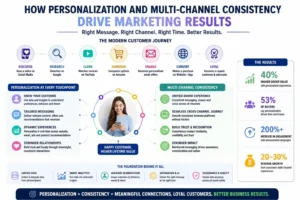
- Multi-Platform Presence: Be present on the major discovery channels: Google (search and Maps), YouTube, Amazon (for products), LinkedIn (B2B), TikTok/Instagram/Snapchat (social discovery), Reddit/Quora (community Q&A), and relevant directories. If your audience is on it, so should you. Platforms often have their own search algorithms, so you must optimize for each one.
- Data & Analytics: Centralize your data. Integrate Google Analytics, social analytics, email/CDP, CRM, and any app insights into a unified view. Segment customers by behavior and preferences (e.g. location, purchase history) to tailor your strategy. This 360° view allows you to see which channels truly move the needle.
- Personalization: Use that data to personalize content. For example, split email subscribers into segments, or show local videos on YouTube for each market. Personalized messaging can increase engagement by 200% or more. Always A/B test dynamic content (emails, ads, CTAs) to continuously improve.
- Consistency: Maintain a consistent brand voice and visuals across channels. Your company name, logo colors, and core messaging should align on every platform. Even details like your business name, address, and phone (NAP) must be identical everywhere, to avoid confusing both users and algorithms.
Core Elements of a Data-Driven Omnichannel SEO Strategy
1. Audit & Foundation:
Start by auditing your current presence across Google, social, marketplaces, apps, and offline. Identify where you rank, where you’re missing, and which channels your target audience prefers. Survey customers or use analytics to see their most-used touchpoints. Meanwhile, document your brand guidelines and voice so content stays on-brand anywhere. (For general SEO basics, Google’s official SEO Starter Guide offers foundational best practices for crawlability and content quality.)
2. Platform Selection:
You can’t win everywhere at once. Choose 2–4 priority platforms based on your industry. For example, B2B brands must master LinkedIn and Google; e-commerce should focus on Google, Amazon, and Instagram; service businesses need Google Local, Yelp, and Facebook; global influencers add YouTube and TikTok. Prioritize channels where your audience spends most of their time.
3. Content Multiplication:
Develop a “cornerstone” content piece (like a comprehensive guide or report) and adapt it across channels. For example:
- Website: Publish the full 2,000+ word guide.
- YouTube: Split it into a video series covering each subtopic. Use local or niche keywords in titles (e.g. “Accounting Software for UK Startups” vs. generic).
- LinkedIn: Share shorter thought-leadership posts or carousel summaries with industry insights. Tag relevant professionals and use hashtags.
- TikTok/Instagram: Create brief “Did you know?” tips or behind-the-scenes clips that tease the topic. Use trending or local hashtags – content with location tags can get 70% more engagement locally.
- Amazon or Product Pages: If applicable, turn the content into e-books or enhanced product descriptions with rich keywords.
- Email/Newsletters: Send tailored excerpts or insights to subscriber segments, driving them back to the full content.
4. SEO Optimization per Channel:
Optimize for each channel’s algorithm:
- Google/Web: Use semantic SEO, cover related subtopics and questions around your core entity. Write clear headings and answer questions in the first paragraphs. Use structured data (FAQ, HowTo, product schema, etc.) so search engines (and AI) can easily parse and highlight your info. Focus on E-E-A-T (experience, expertise) by citing studies and linking to trusted sources.
- YouTube: Treat it as the world’s second largest search engine. Include region-specific keywords in titles and descriptions (e.g. “Best Café Nearby [City Name]”). Add transcripts and timestamps for keyword-rich content. Create eye-catching thumbnails. Always end videos with a clear call-to-action (e.g. “Visit our site for more”).
- Amazon: Use tools like Helium10 or SellerApp to research high-volume, low-competition keywords. Optimize your title [Brand + Keyword + Feature + Benefit] and bullet points. Include lifestyle images with captions, encourage reviews (15+ reviews can 270% boost conversions). Monitor Q&A on your product pages and answer promptly to improve search relevance.
- LinkedIn: Use location and sector keywords in your Company Page and employee bios. Share content on specific themes (e.g. “AI in Healthcare Compliance”) that align with your niche. Join industry groups and post case studies or whitepapers for authority. LinkedIn’s search favors profiles and pages that use keywords in the “About” section and active posting.
- TikTok/Instagram: On TikTok, leverage trending sounds and hashtags along with local tags. Authenticity wins – behind-the-scenes and “edu-tainment” content performs well. Instagram Reels and Stories also surface in search, so include captions and relevant hashtags.
- Local and Directories: Claim your Google Business Profile (core of local SEO) and optimize it with up-to-date hours, photos, and posts. List your business on Trustpilot, Yelp, TripAdvisor, etc. for reviews and visibility. For example, tradespeople should be on Checkatrade/Yell, hospitality on TripAdvisor/Yelp, so customers find you both online and offline.
5. Cross-Channel Promotion:
Every channel should promote the others. Embed your YouTube videos in blog posts, link your website in social profiles, and use TikTok/Instagram to tease longer content on your site or YouTube. Create an editorial calendar that synchronizes themes across channels. For instance, a LinkedIn post can reference a YouTube video, which links back to your blog guide, which in turn mentions your upcoming TikTok live session. This web of content signals consistency to search engines and keeps users engaged across platforms.
6. Brand Consistency:
Keep your core message and visuals the same everywhere. Adapt tone for each audience (more formal on LinkedIn, casual on TikTok), but the brand promise should feel familiar. Always present your company name, address, and phone number identically across Google Business, social bios, and directories. Inconsistent info can confuse both search algorithms and customers, hurting your rankings and credibility.
7. Marketing Automation & AI Assistants:
Use automation tools to run omnichannel campaigns efficiently. Schedule social posts, automate email drips, and set up retargeting ads based on user behavior. Deploy chatbots on your website and messaging apps to capture leads and answer FAQs instantly – this extends your omnichannel support and can even boost SEO by increasing engagement on the site. As one study notes, leveraging CRM and analytics helps scale personalization across channels.
8. Measure and Optimize:
Define clear KPIs up front: organic traffic by channel, engagement rates, lead conversions, and customer lifetime value, for example. Use UTM parameters and Google Analytics (or equivalent) to trace user journeys end-to-end. Track not just website metrics but social and app analytics too. Monitor AI visibility if possible – how often your content is cited in AI answers. Adjust strategy based on data: if YouTube videos get lots of watch time but little site traffic, revise your CTA placement. A/B test headlines, thumbnails, and content formats. Continually refine and expand what’s working.
AI-Driven and Conversational Search (AEO, GEO, NLP)
The search landscape is shifting to AI. Answer Engine Optimization (AEO) means making your content answerable by AI platforms. Focus on clear, factual writing and structured content so AI (like Google AI Overviews or ChatGPT) can easily extract answers. For example, lead each section with a direct answer to a question, use bullet lists, and employ FAQs with schema markup. As Search Engine Land notes, content should be “self-contained” – paragraphs that stand alone with complete answers. Use schema (FAQPage, HowTo, Q&A) liberally to feed facts to AI engines.
Generative Engine Optimization (GEO):
Aim to get cited by AI. GEO emphasizes entity clarity and multi-platform presence. Be active on forums (Reddit, Quora), publish video tutorials, and get featured in industry articles – AI often pulls from those as well. Track “share of voice” in AI responses: tools like the Semrush AI Visibility Index show how often your brand appears in AI answers. As one expert puts it, GEO shifts the goal from clicks to being mentioned in answers. In practice, that means monitoring brand mentions (positive ones attract AI attention) and structuring info so that an AI can cite it.
Conversational Queries & Voice:
People now speak to search engines. Optimize for natural language. Include question-based headings (“What is X?”, “How to Y?”) and answer them in plain English. Use user-generated content and reviews to capture the exact phrases real customers use. Ensure content is accessible to AI: use structured data, alt text on images, and clear HTML (avoid hiding text in images or PDFs). Bullet points and numbered lists are especially helpful for LLM summarization. By following these tips, your content becomes easier to surface in voice search responses and AI chatbots.
Semantic & Entity SEO:
Modern search is no longer keyword-centric. It understands entities and context. Therefore, identify the key entities (people, products, places) in your topic and cover all their related subtopics. For example, an article on “smartwatches” should also mention “fitness tracking,” “heart rate,” “battery life,” etc. This co-occurrence signals expertise. Use tools or knowledge panels to discover what concepts cluster around your main topic. Where possible, add schema for identified entities and fact-check with reputable sources. The goal is not just to match a query, but to become part of the Knowledge Graph of your industry. Well-structured entity-based content ranks better and is more likely to be cited in AI-driven answer boxes.
Omnichannel SEO Implementation Roadmap & Best Practices
Follow a phased approach:
-
Phase 1 – Foundation: (Weeks 1–2) Do a comprehensive audit of Google and all chosen platforms. Survey customers to learn their favorite channels. Define your brand voice, keywords, and messaging pillars for consistency. Make sure all technical SEO basics (site speed, mobile-friendliness, secure HTTPS) are solid on your website.
-
Phase 2 – Strategic Focus: (Weeks 3–4) Pick 2–3 priority channels and create content calendars aligned with your overall theme. For each channel, outline the types of content you’ll post (e.g. weekly LinkedIn posts, bi-weekly YouTube videos, daily TikTok tips). Set up analytics and UTM tracking on all content so you can measure cross-channel performance.
-
Phase 3 – Content Creation: (Weeks 5–8) Implement your content multiplication plan. Produce the core content (blogs, videos, podcasts). Adapt it for each channel (e.g. edit a full webinar into a 5-minute YouTube clip and 3 short TikToks). Maintain a regular publishing schedule – consistency builds both SEO and audience trust.
-
Phase 4 – Optimization & Testing: (Ongoing) Every month, review the data. Use A/B tests on headlines, formats, and CTAs on each platform. Monitor key metrics (search impressions, clicks, watch time, form submissions, sales conversions). Refine underperforming pieces and double down on what works.
Pitfalls to Avoid: Don’t simply repost identical content everywhere – each platform has its own style and algorithm. For example, the high-production tone that works on LinkedIn may flop on TikTok. Also, don’t ignore platform analytics; YouTube and social insights reveal different aspects of user behavior. Finally, quality beats quantity: it’s better to dominate 2-3 channels than to have a scattered presence on many.
How to Measure Omnichannel SEO Success Across Channels
Track a mix of traditional SEO metrics and new omnichannel SEO KPIs:
- Visibility: Cross-platform search rankings, impressions, and share of voice (how often your brand is visible vs. competitors).
- Engagement: Click-through rates, time on page or watch time, social likes/shares/comments.
- Conversions: Website sessions by source, leads/forms attributed by channel, sales from each touchpoint, and customer lifetime value by acquisition channel.
- Brand Metrics: Volume of brand mentions across the web and social, sentiment (positive vs negative buzz), and increases in direct or navigational searches for your brand (indicating greater awareness).
Use analytics dashboards and UTM tagging to link everything back to specific campaigns and channels. Regularly report on these stats and iterate. Remember, omnichannel SEO is a long-term investment: it takes time to build presence and trust across platforms.
The Future of Search & Your Omnichannel Edge
Stay flexible. Voice search (e.g. “Ok Google, near me”) is growing, so optimize for conversational queries and local phrases. Visual search will become mainstream, ensure your product images have descriptive alt text and your site has an image sitemap for Google Lens and Pinterest. AI powered search will only get smarter, so invest in evergreen, high-quality content that can be easily adapted for new formats. By building a strong omnichannel SEO foundation now, one that is global in reach and data-driven in strategy – you’ll be better positioned for whatever comes next.
Frequently Asked Questions
-
What is Omnichannel SEO and how is it different from traditional SEO?
Omnichannel SEO means optimizing for all search platforms (Google, Amazon, YouTube, social apps, etc.) rather than just one. It also means unifying the user experience across channels. Unlike traditional SEO (which focuses on ranking high in search results), omnichannel SEO focuses on being discoverable and consistent on every channel where your audience looks. Think beyond keywords: use tailored content, local listings, social optimization, and AI-friendly formats to reach customers wherever they are.
-
How do I use data to drive my omnichannel strategy?
Collect and unify your analytics (website, social, CRM, ads) into one dashboard. Segment your audience by behavior or demographics and track which channels they use most. Use those insights to personalize content – for example, target mobile users with quick videos and desktop users with long-form articles. Continuously analyze performance (impressions, clicks, conversions) for each channel and adjust your strategy based on what the data shows. In short: let the numbers tell you where to invest your effort.
-
What role does local search play in an omnichannel SEO approach?
Local search ties the online and offline worlds together. Many customers use Google or maps to find nearby businesses. Optimizing for local omnichannel means claiming your Google Business Profile and local directory listings, encouraging reviews, and using local keywords. For example, a customer might find you on Google Maps, read Yelp reviews, then visit your shop. Ensure your NAP info is identical on Google, Yelp, Facebook, and your website. Also consider local social ads or geotargeted content. Local SEO is a critical piece of the omnichannel puzzle for brick-and-mortar and service businesses.
-
What metrics should I track for omnichannel SEO success?
Beyond Google rank and clicks, track visibility and engagement on each channel. For example: search rankings on Amazon/YT, social impressions, hashtag reach, video views, etc. Also measure downstream conversions: how many leads or sales come from each source. Brand metrics (mentions, sentiment, direct searches) indicate if awareness is growing. Finally, for AI/answer-engine visibility, track whether your site or brand is appearing in AI Overviews or chatbot answers, if possible. This multi-faceted tracking shows your full omnichannel impact.
-
Why is personalization so important in omnichannel marketing?
Personalization tailors the experience to each user, which drives engagement and loyalty. Data shows that two-thirds of consumers expect brands to understand their interests, and 53% say personalized marketing directly increases the likelihood of them buying. In an omnichannel context, personalization means adjusting content for each segment on each platform (e.g. location-based video content, emailed product recommendations). It makes customers feel “seen” and boosts conversions, which is why modern omnichannel SEO strategies always include personalization rules based on analytics.